




Type: Builder Gel
Buy LAVIS Builder Gel In The Bottle - B2, FREE 1 Lavis Fiber Gel + 1 Classy Nail Art 3-in-1 Handheld Nail Lamp with Magnet & Stamper + 1 Round Head Brush
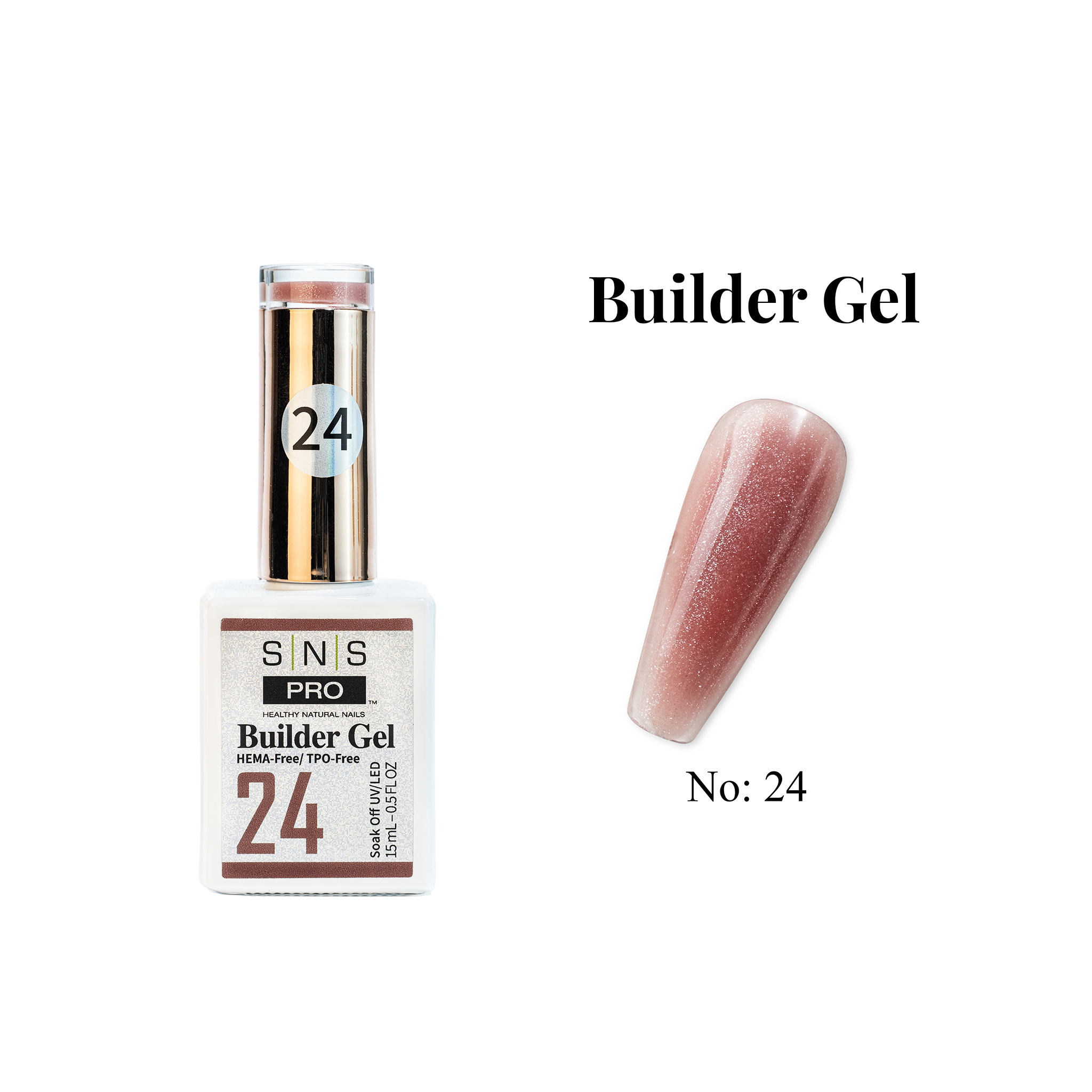
Type: Builder Gel
SNS Builder Gel In The Bottle - 24 - HEMA-Free/TPO-Free - 0.5oz
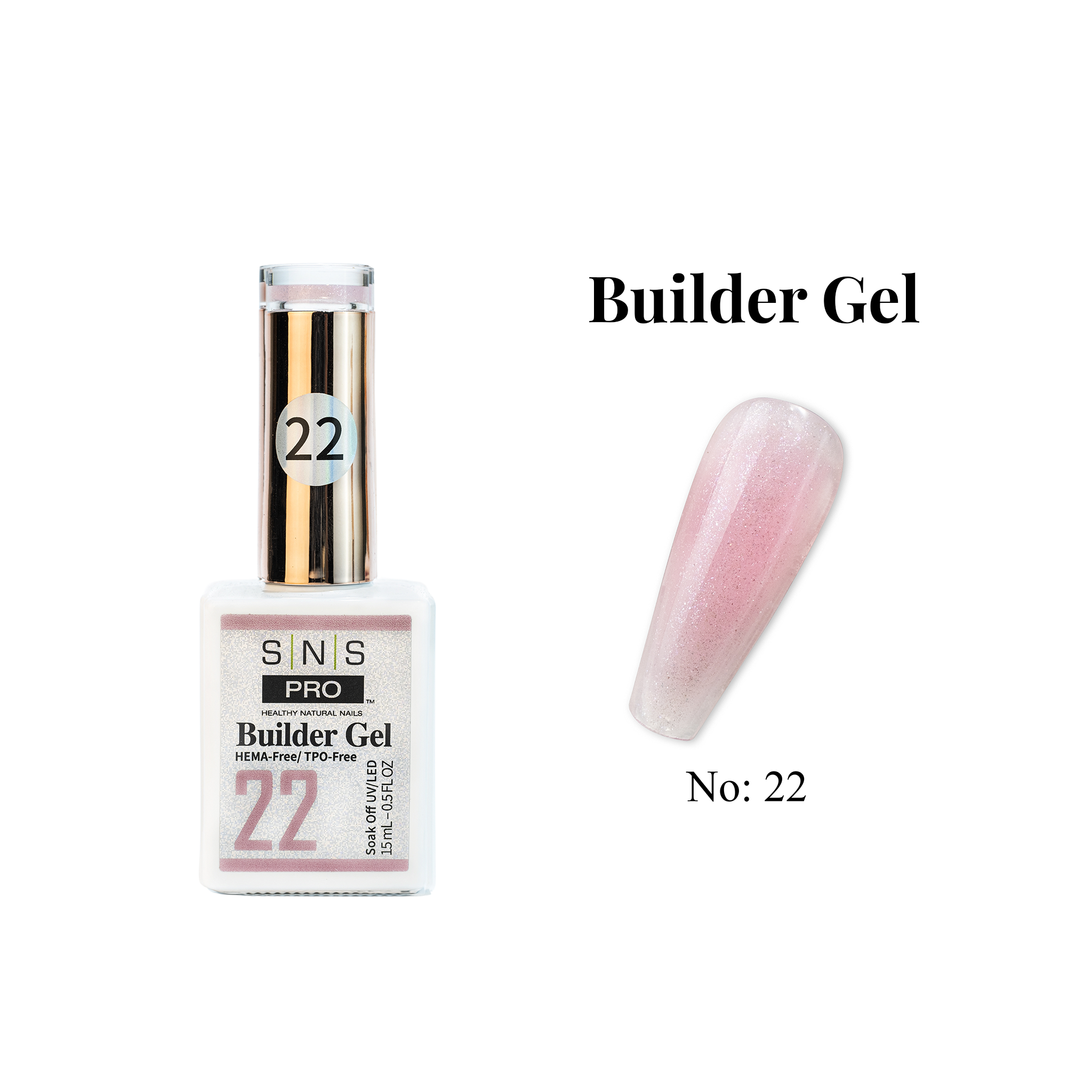
Type: Builder Gel
SNS Builder Gel In The Bottle - 22 - HEMA-Free/TPO-Free - 0.5oz
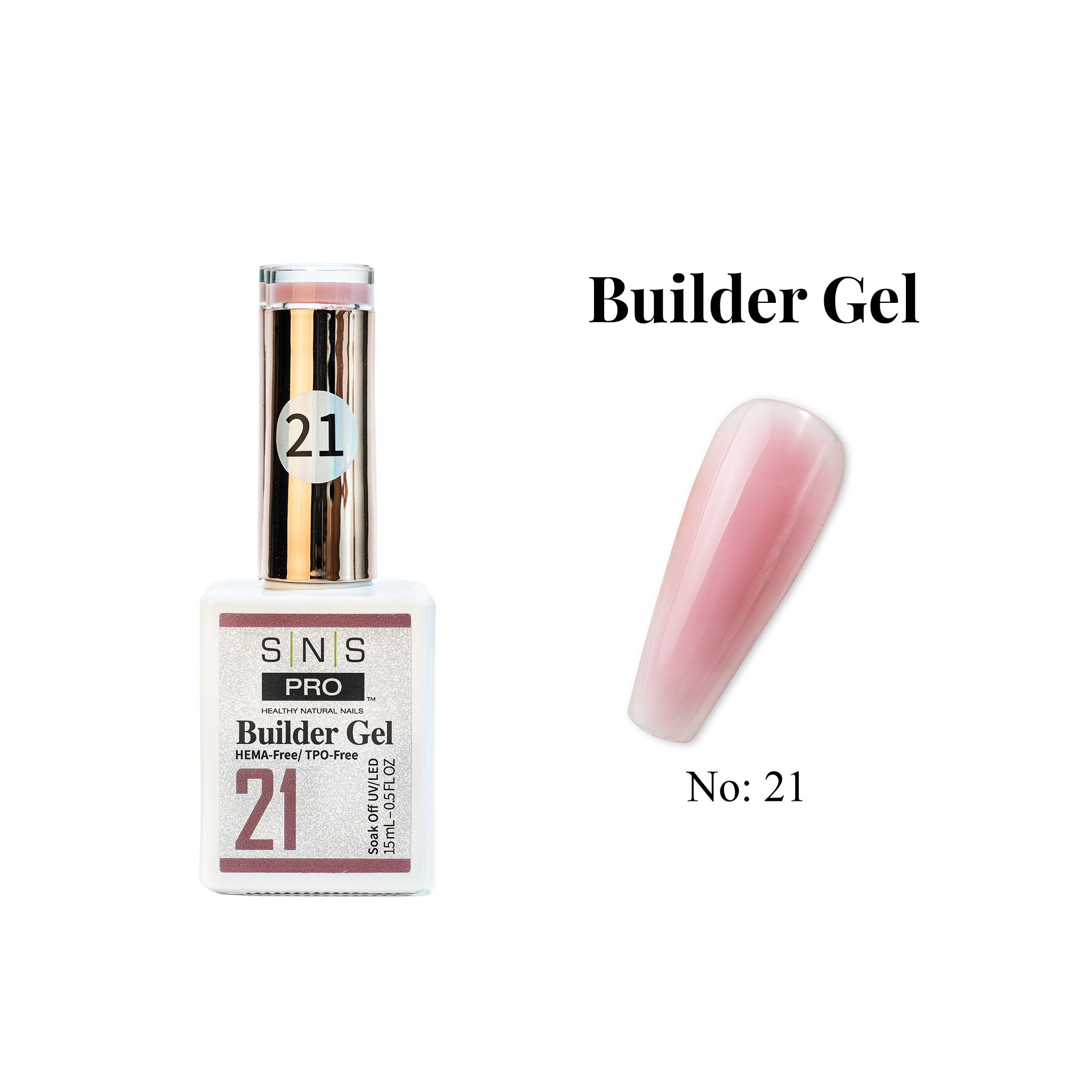
Type: Builder Gel
SNS Builder Gel In The Bottle - 21 - HEMA-Free/TPO-Free - 0.5oz
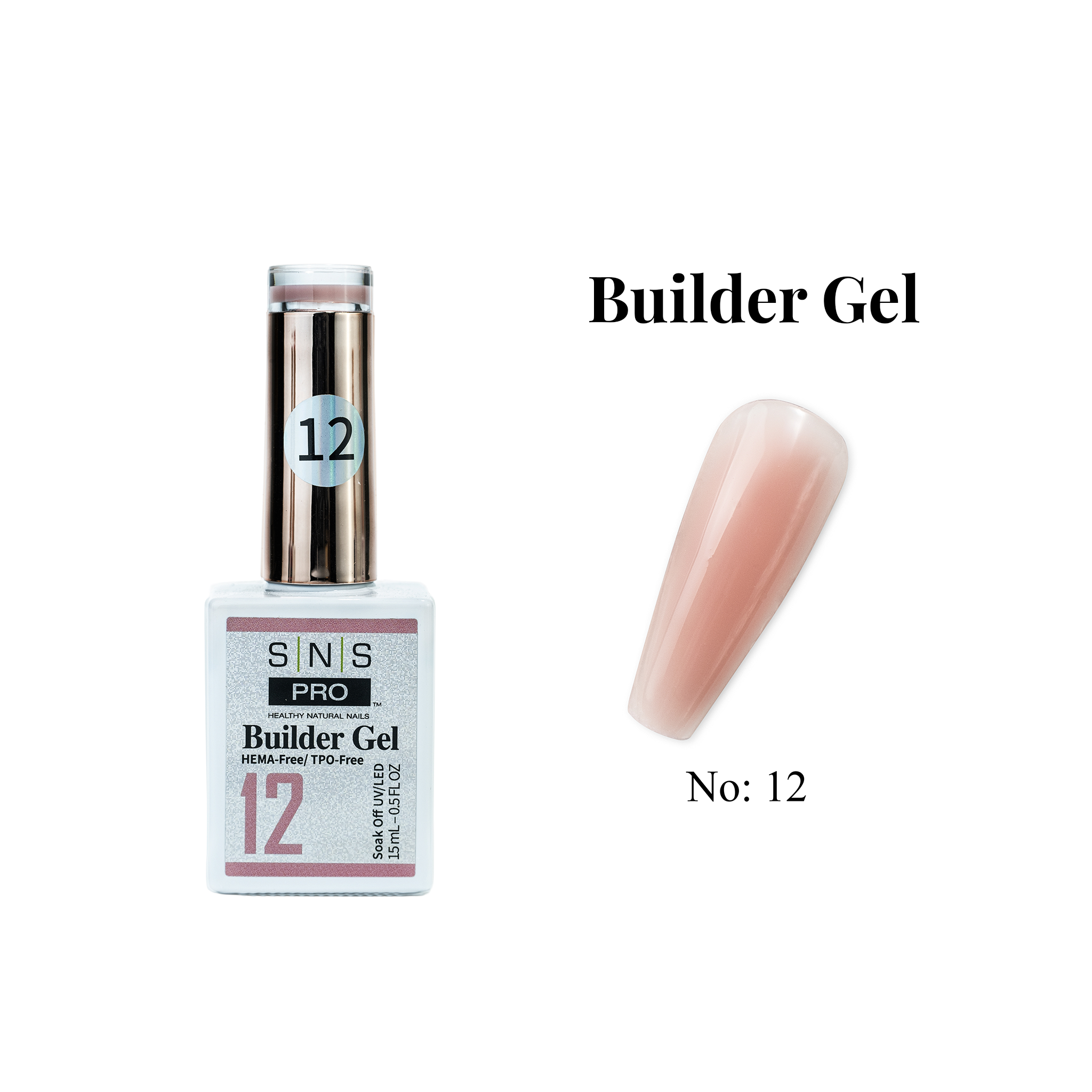
Type: Builder Gel
SNS Builder Gel In The Bottle - 12 - HEMA-Free/TPO-Free - 0.5oz
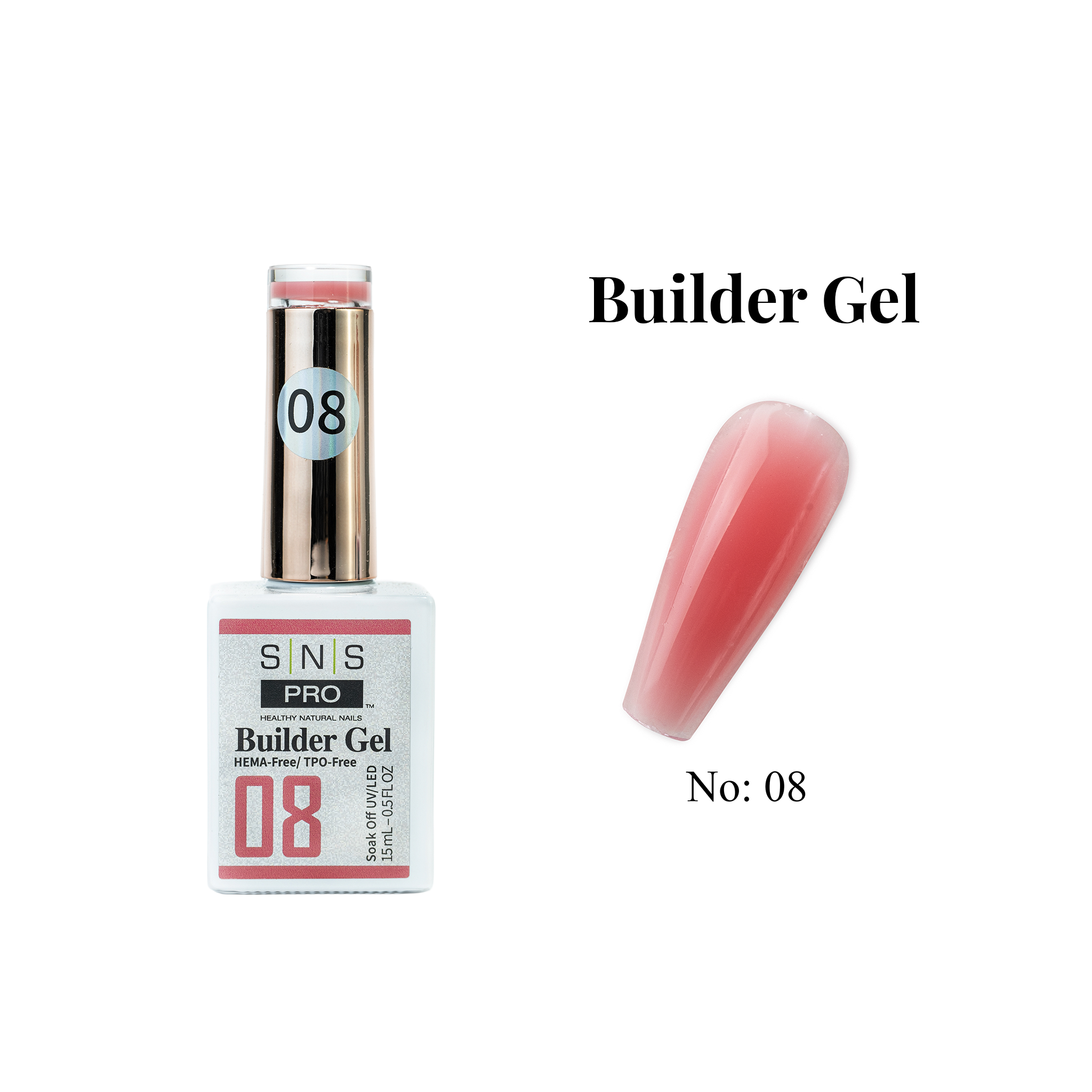
Type: Builder Gel
SNS Builder Gel In The Bottle - 08 - HEMA-Free/TPO-Free - 0.5oz
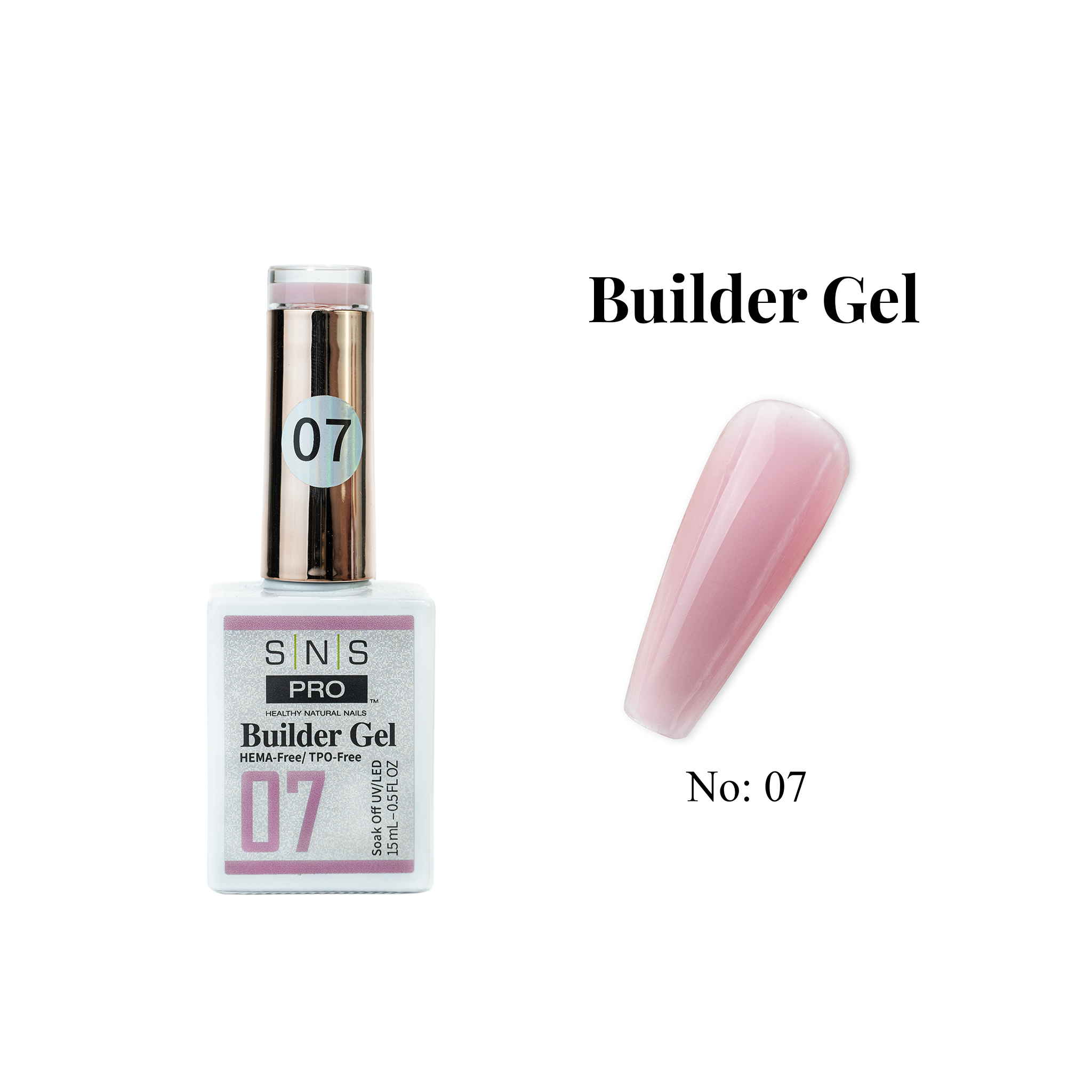
Type: Builder Gel
SNS Builder Gel In The Bottle - 07 - HEMA-Free/TPO-Free - 0.5oz
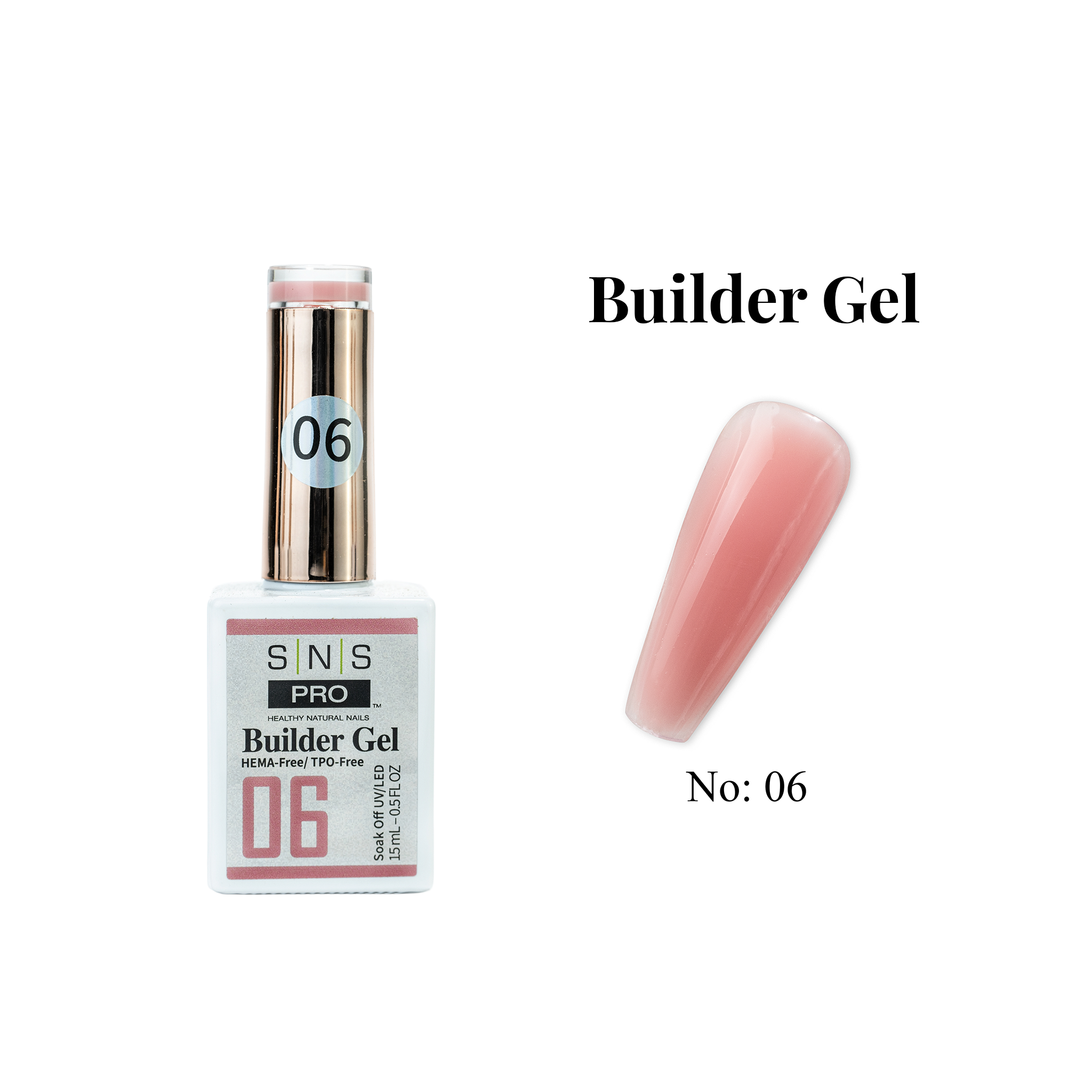
Type: Builder Gel
SNS Builder Gel In The Bottle - 06 - HEMA-Free/TPO-Free - 0.5oz
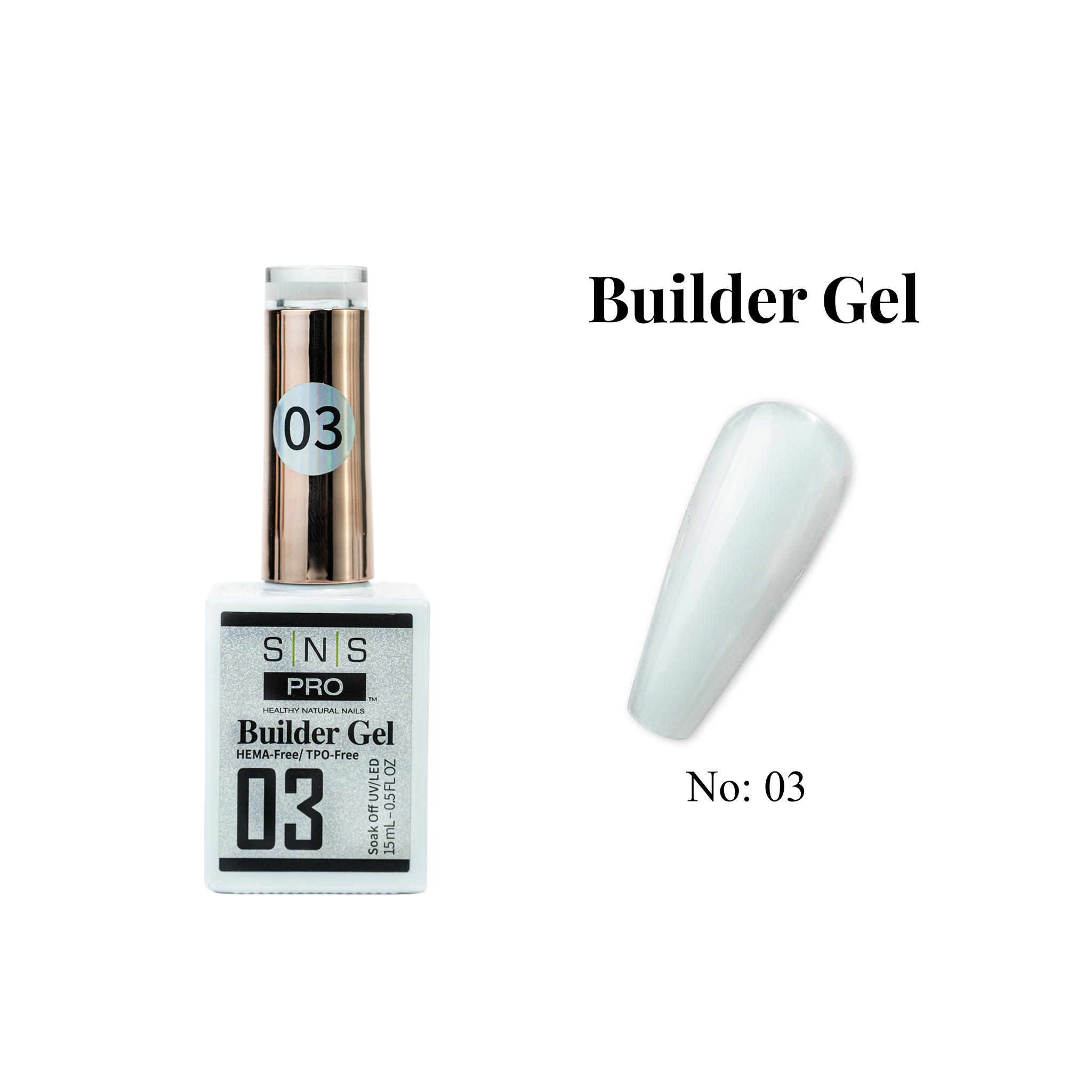
Type: Builder Gel
SNS Builder Gel In The Bottle - 03 - HEMA-Free/TPO-Free - 0.5oz
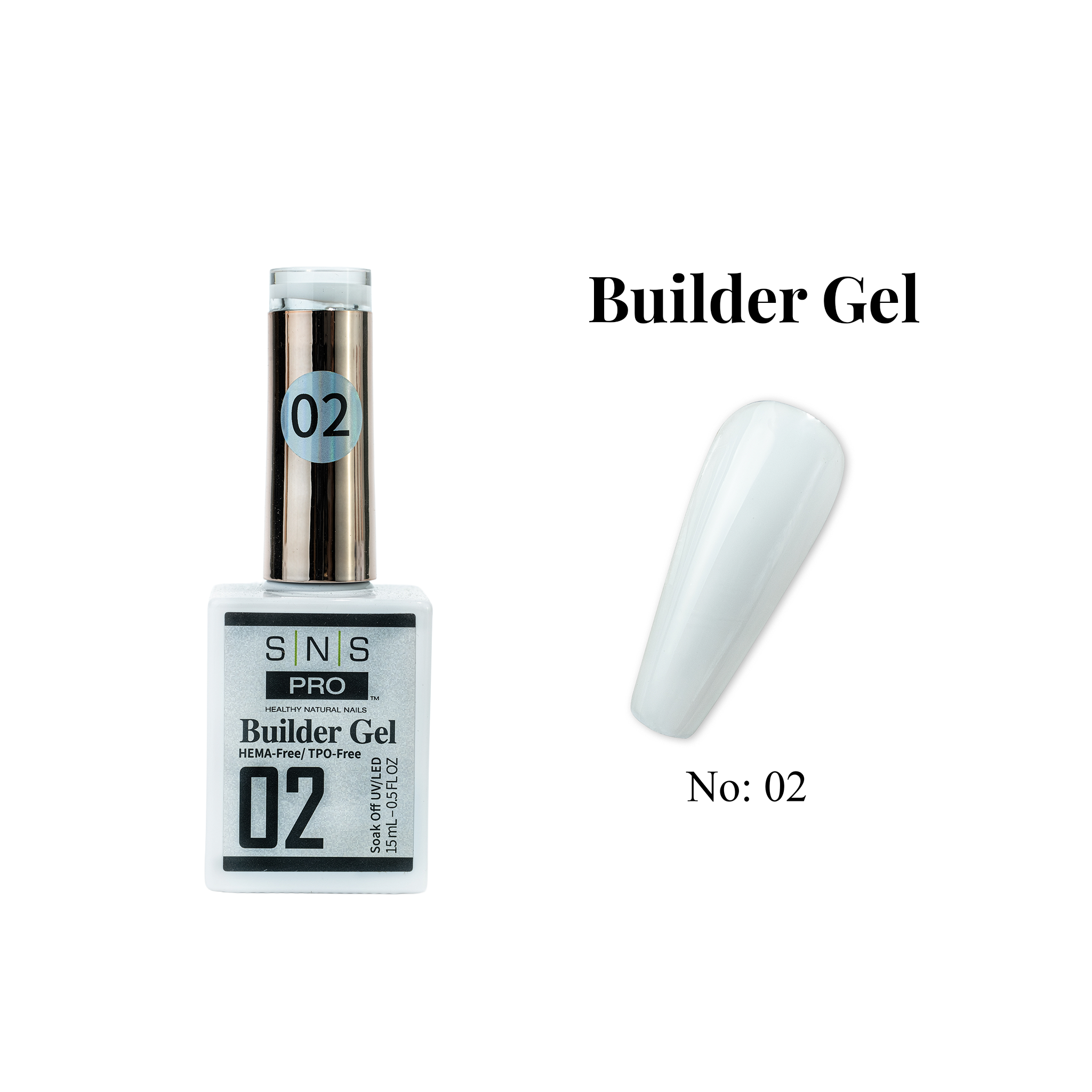
Type: Builder Gel
SNS Builder Gel In The Bottle - 02 - HEMA-Free/TPO-Free - 0.5oz
Frequently asked questions
Is SNS builder gel HEMA-free and TPO-free?
Yes, all 24 shades and the set. HEMA is the small monomer in most gels that is most often named when someone reacts to a gel product, and TPO is a photoinitiator, the part that turns lamp light into a cure. We formulate this builder without either one. That is stated as what we left out, not as a promise that nobody can react to it, because no cosmetic can honestly promise that. If a client has had trouble with gel before, check the ingredient list of what they wore. It's usually one of these two.
What is the difference between builder gel and gel polish?
Thickness and job. Gel polish is painted thin for color and has no structure of its own. Builder gel is placed as a bead, floated into an apex and cured into something you can file and shape, so it reinforces a weak nail, patches a break, or builds a short extension. You can wear builder on its own with a top coat, or put gel color over it. Ours is in a bottle with a brush, so it handles like a polish even though it works like a builder.
Can you use builder gel on natural nails without extensions?
That is its most common use. An overlay is a thin apex of builder over the natural nail, cured, then either topped or colored. It gives a nail that splits or peels enough structure to grow past the fingertip, and it's the reason the milky and sheer pink shades exist: they're meant to be worn alone and look like a healthy natural nail. When the nail grows out, file the old builder down and rebuild over it rather than removing the whole thing.
How do you remove builder gel?
Fill it if you can. File the grown-out builder down by about two thirds, prep the new growth, and place a fresh bead. If it has to come off completely, it's a soak-off gel: file the surface thin, wrap the nail in acetone, wait, and let it lift. Don't pry and don't file down to the plate. Removing an enhancement by force is what damages nails, and a soak-off builder lets you skip that.
Do I need a lamp for builder gel?
Yes, every layer cures under a UV/LED lamp. Any hybrid lamp works. Builder layers are thicker than a coat of color, so some clients feel a brief heat spike as it cures. Use a low-heat or pause setting for the apex layer rather than pulling the hand out early, which leaves the gel undercured. Our cordless hybrid lamp is 54W with a low-heat mode, and it sits in the tools collection if you're starting from scratch.
What is builder gel in a bottle?
A thicker gel that holds its shape. Gel polish is painted thin and cured for color. Builder gel is placed in a bead, floated into an arch over the stress point of the nail (the apex), and cured into a structure that is hard enough to file. That is what lets it do three jobs a color gel can't: reinforce a natural nail that keeps breaking, build a short extension without tips or a monomer, and patch a split or a corner that's gone.
The bottle is the point. Traditional builder gel comes in a pot and needs a separate brush, a cleanser for that brush, and some patience. Ours comes in a 0.5oz bottle with the brush in the cap, the same format as a gel polish, so you open it, place the gel, and put the cap back. No pot, no spatula, and the brush is replaceable when it wears (the replacement brushes for PRO 0.5oz bottles sit in tools and accessories).
We formulate the whole SNS line HEMA-free and TPO-free, and it soaks off in acetone rather than needing to be filed away.
Two builder lines sit on this page: the SNS 24-shade bottle line described above, and the Lavis jar line, 19 shades in 30 ml pots worked with your own brush. They do the same job in two formats, and the sections below take them in turn.
What do HEMA-free and TPO-free actually mean?
HEMA (hydroxyethyl methacrylate) is the small, fast-penetrating monomer found in most gel products. It is the ingredient most often named when a client develops a reaction to gel. TPO (trimethylbenzoyl diphenylphosphine oxide) is a photoinitiator, the part of the formula that turns light from the lamp into a cure.
Neither one is in this builder gel. That is the whole claim, stated as what we left out. We don't put a medical-sounding label on it and we don't promise nobody will ever react to it, because that isn't a promise anyone can make about a cosmetic. What we can say is that the two ingredients people search for by name when they've had trouble with gel are not in the bottle, and the formula still cures hard, self-levels, and holds an apex.
If you're a tech, this is the answer to the client who says "I can't wear gel anymore." If you're doing your own nails and you've reacted to a builder before, check what was in it. Often it's one of these two.
The SNS bottle line: 24 shades and what they're for
Every shade is sheer to semi-sheer, because builder gel is worn either on its own as a natural-looking enhancement or under color. The 24 are numbered rather than named, so here is how they group when the bottles are lined up.
| Shades | How they read on the nail | Reach for them when |
|---|---|---|
| 01 | Clear | You're building under gel color, cat eye or chrome and want nothing of the builder to show through. Also the repair shade. |
| 02, 03 | Milky and soft white | A milky "clean girl" nail, a soft French base, or a client whose natural nail is stained and wants it evened out without pink. |
| 04 to 07, 21 to 23 | Sheer pinks, cool to warm | The natural-nail look. Sheer enough that the free edge still shows, with enough tint to make the bed look healthy and even. |
| 09 to 15, 19 | Peach and warm nudes | Warmer skin tones, and anyone who finds a pink builder reads too cool on them. 13 and 14 are the most apricot of the set. |
| 08, 16, 17 | Rose and coral | A builder that stands in for color. Wear it alone with a top coat and it looks like a sheer polish that never chips. |
| 18, 20, 24 | Deeper mauve and brown nudes | Deeper skin tones, and clients who want the enhancement to disappear rather than glow pink. |
The groupings above come from the swatches on each product page, so treat them as a guide and check the photo on the shade you're picking. Every bottle is $18.99.
Picking a shade
- Going under color every time: 01 Clear. One bottle covers every client.
- Natural-nail enhancement, no color on top: match the client's nail bed. Cool-toned hands take 04 to 07, warm-toned hands take 09 to 15, deeper hands take 18, 20 or 24. Sheer builder is forgiving, so a shade either side still works.
- Milky or soft French: 02 or 03 across the whole nail, then a white tip in gel color if you want the line crisp.
- Salon stocking the line: the set of 24 puts every option on the table for $450.00, against $455.76 for the same 24 bottles bought one at a time. The $5.76 is not the reason to buy it; having the whole range on the table from day one is. Most salons then rebuy 01 and two or three nudes in singles.
- Doing your own nails: one clear and one nude that matches you. That's the whole kit for a year of overlays.
The Lavis jar line: 19 shades in 30 ml pots
The second line on this page is Lavis Builder Gel in the Jar: 00 Clear plus eighteen named shades, French White through Apricot, in 30 ml pots at $16.99. Lavis formulates it HEMA-free. It is a medium-thick gel, more fluid than most jar builders, so it still self-levels into an apex rather than sitting where you put it.
The format is the real difference, and it cuts both ways.
| SNS, in the bottle | Lavis, in the jar | |
|---|---|---|
| Size | 0.5 oz (15 ml) | 30 ml, twice the gel |
| Brush | In the cap, replaceable | Not included; use your own polymer or liner brush |
| Shades | 24, numbered | 19, named on the jar |
| Formulated without | HEMA and TPO | HEMA |
| Suits | Fast overlays, one nail at a time, no extra kit | Volume work, and techs who already own a brush they like |
A tech doing three or four builder sets a week is usually better off with the bottle, because the brush is there and nothing else has to be cleaned. A station running builder all day gets more gel per dollar from the jar, and a brush you have chosen yourself places a bead more precisely than a cap brush ever will. The Lavis set of 18 is $305.82, which is exactly eighteen jars at $16.99, so it is a stocking decision and not a saving. There is also a Lavis B2 bottle bundle on this page that ships with a fiber gel, a handheld lamp and a brush; check the listing for what is in the box on the day you order.
How do you apply builder gel in a bottle?
- Prep. Push cuticles back, remove the shine from the nail plate with a fine buffer, shape, and wipe with alcohol so no dust or oil is left. Builder lifts on a plate that isn't clean far more than it lifts for any other reason.
- Base coat. A thin coat of a bonding gel base (our Vitamin Extra Bonding UV Gel Basecoat is the one made for it), cured.
- Slip layer. A very thin coat of builder over the whole nail, not cured. This gives the bead something to float on.
- Place the bead. Pick up a bead on the brush and set it just behind the center of the nail, where the stress point is. Push it gently toward the cuticle, leaving a hairline gap, then pull it down toward the free edge.
- Let it settle. Turn the hand over for a few seconds and the gel self-levels into a curve. Turn it back, check the apex from the side, and flash-cure each nail for a few seconds to lock it before moving on.
- Full cure. Cure the whole hand under a UV/LED lamp for the full cycle. Builder layers are thicker than color, so if a client feels a heat spike, use the low-heat setting (our cordless hybrid lamp has one) rather than pulling the hand out early.
- Refine. Wipe the tacky layer, then file the sidewalls and shape the apex with a 100/180 file. A well-placed bead needs very little filing.
- Finish. Wear it as is with a top coat, or add gel color, cat eye or chrome and then top coat. The Glassy Super Shine and Matte top coats both work over it.
Short extension: the same steps, with the bead pulled past the free edge over a form and cured before the form comes off. Builder in a bottle is at its best on short to medium lengths. For long sculpted extensions, our PRO Sculpt Poly Gel is the tool.
Fill it rather than remove it
Fill it. When the nail grows out, file the old builder down by about two thirds, prep the new growth, and rebuild the apex over what's left. The set stays on for months of fills without ever being fully removed, which is easier on the nail than a fresh application each visit.
When it does need to come off, it's a soak-off gel. File the top layers thin, wrap in acetone, and let it lift. Don't pry, and don't file all the way down to the plate. That is the part of any enhancement that damages nails, and it's the part a soak-off builder lets you skip.
Builder gel, poly gel or dip: which one?
| Builder gel in a bottle | Poly gel | Dip and acrylic powder | |
|---|---|---|---|
| Best at | Overlays, apex, repairs, short extensions | Long sculpted extensions | Color, strength, no lamp |
| How it's placed | Bead from the bottle brush, self-levels | Thick paste, shaped with a brush and slip solution over a form | Dipped into powder over a base, set with activator |
| Lamp | UV/LED, every layer | UV/LED, every layer | None |
| Removal | Soak off, or fill | File and soak | Soak off |
| On this site | This page | PRO Sculpt Poly Gel | Dip & Acrylic Powder |
If the question is really "builder gel or dip for my own nails," our BIAB vs dip powder comparison goes through wear, removal and the lamp question properly. Short version: dip needs no lamp and is the easier system to learn at home, builder gives you structure and a fill cycle instead of a fresh set each time.
What you'll need alongside it
- A UV/LED lamp. Any hybrid lamp cures it. Ours is 54W, cordless, with a low-heat mode.
- A gel base coat and a gel top coat, both in Base & Top Gel.
- A 100/180 file, a buffer, alcohol and lint-free wipes, and replacement brushes for the bottle, all in Nail Tools & Accessories.
- Color, if you want it: SNS Gel Only for a straight gel color over the builder, Gel & Lacquer Duo if the client wants the matching lacquer for touch-ups, or Cat Eye Gel for an effect.