


Type: Nail Art
Solid Pigment - Chrome Rub-On Nail Art - UniChrome Palette
Frequently asked questions
Can you do chrome nails over dip powder?
Yes, with one change at the end of the set. Chrome pigment needs a cured gel surface to grip, so after the Sealer Dry and the filing you cure a coat of gel top under a UV/LED lamp instead of finishing with the dip Gel Top, rub the chrome onto that cured surface, and seal it with another cured coat of gel top. The dip does the color and the strength underneath; the gel top is what the mirror sits on. A dip set with no lamp cannot take a chrome.
What is in the UniChrome palette?
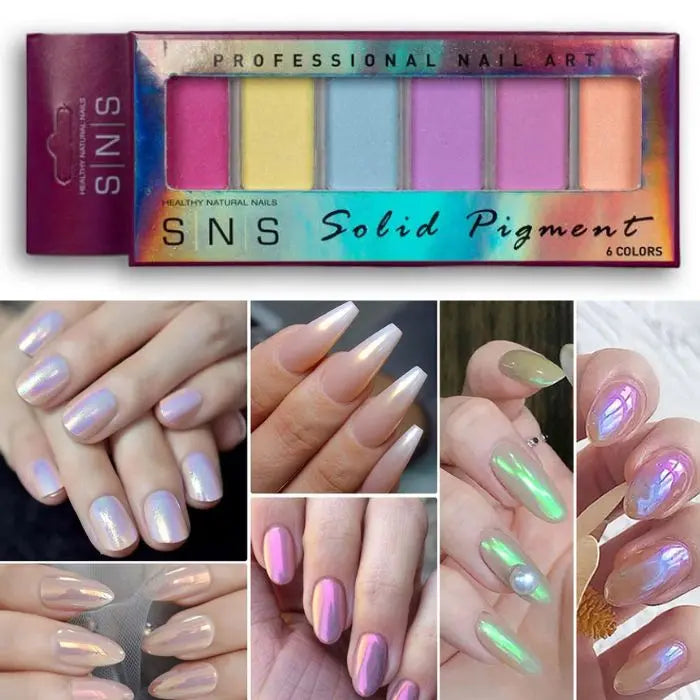
Six prismatic pigments in one compact for $11.02, made in the USA. They are rainbow-shifting rather than flat metallic: over clear the effect is a sheer holographic wash, over white it is a full prismatic mirror, and over a matching color it deepens that color with the shift on top. The product page suggests trying the colors on clear, white and matching bases, and that is the fastest way to learn what each one does. The metallic Disco palette is not currently listed.
How do you apply chrome powder?
Over a cured gel surface: a GelStar color for a chrome in that color, or a cured gel top over a dip or acrylic set. Rub a small amount of pigment on with the sponge applicator in small circles until the mirror comes up; the shine comes from pressure, not from more powder. Cure briefly, dust the nail and the skin, then seal with a coat of GelStar Ultra-Shine top capped over the free edge and cured. Our chrome tutorial on the blog gives the lamp times.
Why is my chrome patchy or dull?
Three usual causes. The surface underneath was not fully cured, so the pigment sank in instead of sitting on top; cure the base coat for the full cycle before rubbing. The pigment was rubbed with too little pressure or too much powder; use less and press harder. Or loose chrome was sealed under the top coat and reads as specks; dust the nail and the surrounding skin before the seal coat. A dark cured base, black or navy, makes any chrome read stronger.
How long does chrome last, and how do I remove it?
As long as the top coat over it. The chrome sits under the sealing gel top, so it does not rub off in wear, and it fails only where the top wears through, usually at the tip if the free edge was not capped. There is no fill for a chrome; when the set grows out, remove and redo. To remove, file the top coat off and the chrome comes away with it, then soak the dip or gel set underneath as you normally would.
What is chrome powder?
A pigment so fine that, rubbed onto a cured gel surface, it lies flat enough to reflect like metal. The nail looks dipped in liquid mercury, or in whatever color you put under it: a chrome over white reads as silver, over black as gunmetal, over a red as a red mirror. It isn't painted on and it isn't mixed into anything. It's pressed onto the surface with a sponge applicator, then sealed under a gel top so the mirror stays.
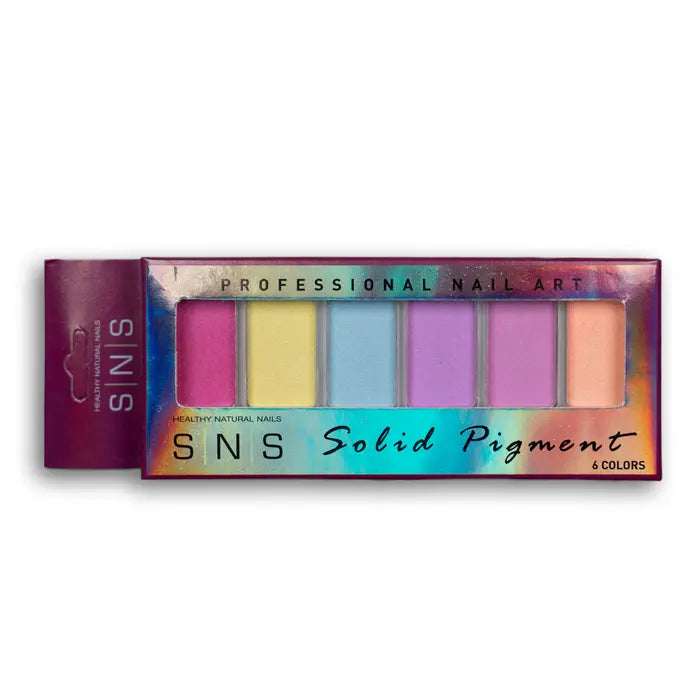
The UniChrome palette is our rub-on chrome: six prismatic, rainbow-shifting pigments in one compact at $11.02, made in the USA. A second palette of straight metallics, the Disco Palette, is not currently listed.
Chrome over dip, gel or acrylic
The searches that bring people here are mostly "chrome dip nails", so the first thing to say is that chrome works over a dip set, and the second is how. Chrome needs a cured gel surface to grip, so the last step of the dip set changes: after the Sealer Dry and the filing, instead of finishing with the dip Gel Top, you cure a coat of gel top under a UV/LED lamp, rub the chrome, and seal with another coat of gel top. The dip does the color and the strength; the gel top is the mirror's canvas.
| Base | What the chrome sits on | What changes |
|---|---|---|
| Dip powder | A cured gel top over the finished dip set | Swap the dip Gel Top for a lamp-cured gel top; the chrome and its seal cure in the lamp |
| Gel | A cured coat of GelStar color, or a cured gel top over it | Nothing; this is the method in our chrome tutorial |
| Acrylic | A cured gel top over the finished acrylic | Same as dip: the gel top is the surface |
How do you apply chrome powder?
This follows the steps in our chrome nails tutorial; it has the lamp times.
- Base. A cured coat of GelStar gel: a white or clear for a silver mirror, black for gunmetal, or any GelStar color from SNS Gel Only for a chrome in that color. Over a dip or acrylic set, the base is a cured gel top instead.
- Rub the chrome. Pick up a little pigment on the sponge applicator and rub it over the cured surface in small circles until the mirror comes up. A very little goes a long way; the finish comes from pressure, not from more powder.
- Cure. A short cure under the UV/LED lamp locks the pigment to the surface.
- Seal. A coat of GelStar Ultra-Shine top from Base & Top Gel, capped over the free edge, cured. The chrome is now under the top and will not rub off.
Dust the nail and the skin before sealing; loose chrome that gets under the top coat shows as specks. Every layer cures under a lamp; ours is in tools and accessories.
Six colors, one compact
The UniChrome palette is six prismatic pigments that shift through the rainbow as the hand moves, rather than six flat metallics. The same pigment reads differently by base: over clear it is a sheer holographic wash, over white a full prismatic mirror, over a matching color a deeper version of that color with the shift on top. Try one nail each way before a full set; the product page says the same, and it's the honest way to learn a chrome.
What you need alongside the palette
- A UV/LED lamp. Chrome only works on a cured gel surface and is sealed under a cured gel top, so even a chrome over dip needs the lamp. Ours is in tools and accessories.
- A gel base for the mirror. White or clear GelStar for a silver, black for gunmetal, any GelStar color for a color chrome. All under SNS Gel Only.
- A gel top. One coat cured before the chrome on a dip or acrylic set, one coat over it on every set. GelStar Ultra-Shine is the one our tutorial uses; under Base & Top Gel.
- A sponge applicator for rubbing the pigment, and a dust brush for the loose chrome before the seal.
For a salon the palette is a small line item next to the lamp and the tops, and one compact does a lot of nails: the pigment is used by the fingertip, not by the scoop. Stock one, and stock a black and a white GelStar with it.
Chrome, cat eye or Air Ombre?
Three finishes clients ask for by the wrong name. Chrome is a mirror, rubbed on. Cat eye is a magnetic line pulled inside a gel color. Air Ombre is a sprayed gradient of dip powder. They stack: a chrome over a cat eye on one accent nail is a common set, and a chrome tip over an Air Ombre fade is another. All of them finish under the same gel top.
Care and removal
- Wear: the chrome lives under the top coat, so it lasts as long as the top does. If the top wears at the tip, the mirror goes with it; cap the free edge on the seal coat.
- No fills: chrome is a finish, not a structure. When the set grows out, remove and redo.
- Removal: file the top coat off, then soak the set underneath as normal, dip or gel. The chrome comes away with the top.
- The compact: keep it closed and dry. Chrome pigment lifts on the slightest draft, and a wet applicator turns it to paste.