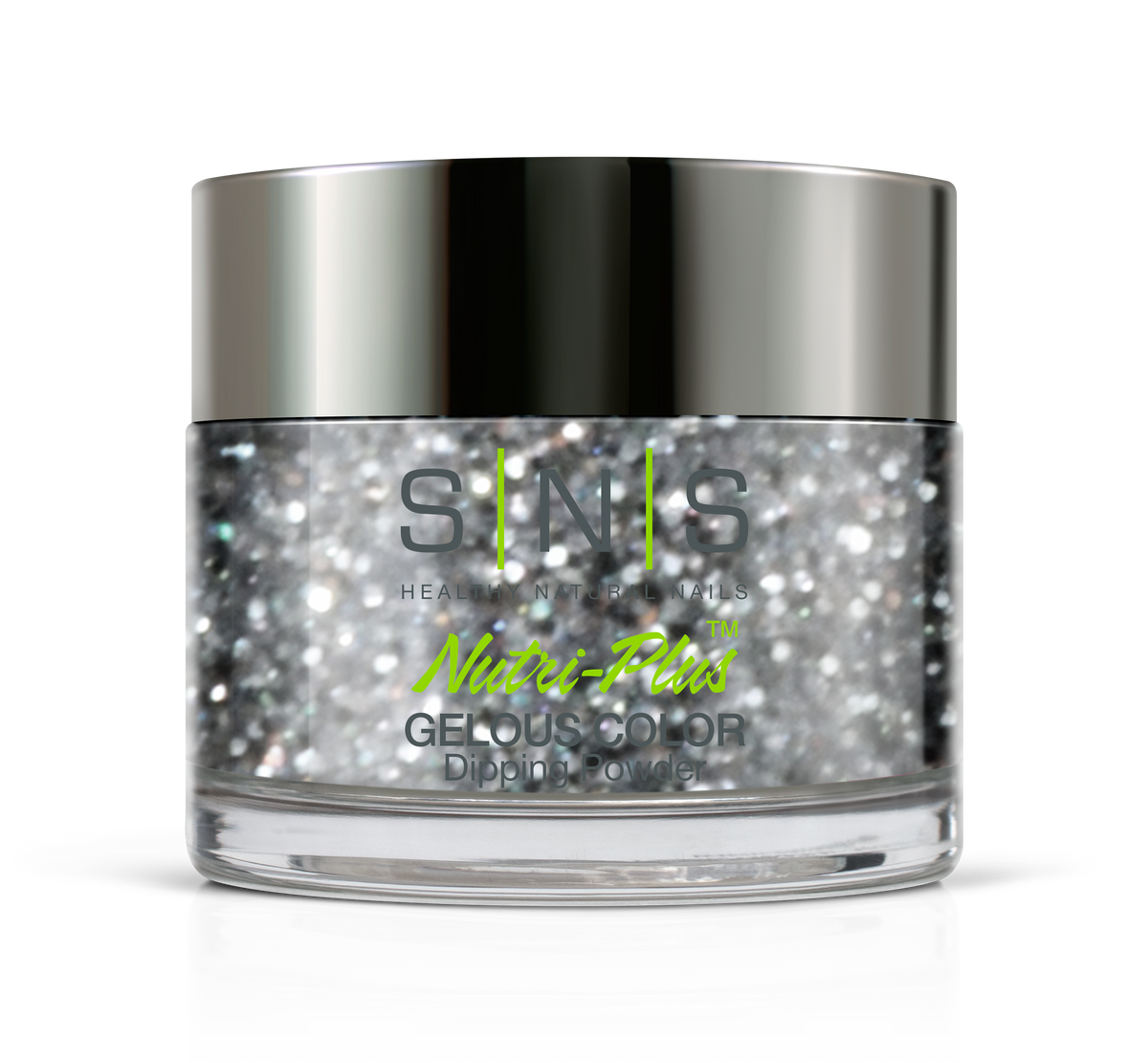

Chrome nails are a surface effect, not a colour. The base shade underneath decides the metallic reading above. Here is how the three application layers work together and why matte top coat is the one finish that breaks the look.
Chrome nails have moved from runway novelty to a staple finish in the nail wardrobe, popular enough that most salons now carry at least one chrome powder in rotation. The reason chrome keeps earning space in style conversations is that it does something no colour polish can replicate: it produces a mirror-like metallic reading that shifts with the light angle. A chrome manicure photographs differently in daylight than it does under evening light, and that visual depth is what gives the finish its signature attention value.
The article below treats chrome as the technical finish it actually is rather than as a colour choice. The core decisions behind a successful chrome set are the base shade underneath, the application pass on the chrome powder itself, and the top coat sealing above. Each of the three decisions changes the final result in a different direction, and understanding what each one does makes the difference between a chrome set that reads mirror-sharp and one that reads cloudy or speckled.
What Chrome Nails Actually Are
Chrome nails are not a type of polish. They are a surface finish created by buffing a fine metallic powder onto a fully cured base layer and then sealing the powder with a glossy top coat. The metallic powder, often called chrome powder, pigment powder, or mirror powder depending on the manufacturer, consists of extremely fine particles that catch and reflect light in a continuous film when they are pressed firmly against a smooth, hard surface. The light-reflection behaviour of that film is what produces the mirror look.
Because chrome is a surface effect rather than a colour, the technique sits on top of whatever base shade the technician or home user chose underneath. The powder itself does not contribute its own colour to the finish in the way a traditional polish does; it carries the metallic quality and reflects the base shade through its reflective surface. A silver chrome powder over a black base produces a different reading from the same silver chrome powder over a nude base, and both differ from the same powder over a bright red base. This is the single most important behaviour of chrome to understand before any application decision is made.
Takeaway
Chrome is a finish, not a colour. The base shade underneath decides what colour the chrome reads as; the powder decides the metallic character.
Four Chrome Looks That Keep Coming Back
The chrome trend has produced several recurring looks that technicians can reference by name during consultations and that home users can save as inspiration. Each look is a specific combination of base shade and powder choice.
| Chrome look | Base shade underneath | Powder character | Suggested products for this look |
|---|---|---|---|
| French chrome | A clean nude or soft neutral across the whole nail, with a contrasting tip in red or deep burgundy at the free edge. | A subtle neutral chrome powder across the whole nail; the metallic layer unifies the two-tone French and softens the transition line. | Nude base from A’DOR Gel-Ons 72, deep red tip from A’DOR Signature 144 HEMA & TPO Free, finished with LAVIS Classic Chrome Powder across the full nail. |
| Moody purple chrome | A deep plum, aubergine, or deep berry base. | A violet or aurora chrome powder that enhances the base purple tone and adds metallic depth. | Deep plum or aubergine shade from LAVIS Gel Collections C01–C17, finished with LAVIS Aurora Chrome Powder for the shifting violet reading. |
| Silver mirror | A black or very dark navy base. | A bright silver chrome powder that reads at maximum reflectivity against the dark base. | Black base from A’DOR Signature 144 HEMA & TPO Free, finished with LAVIS Classic Chrome Powder for the brightest silver mirror reading. |
| Glazed pearlescent | A soft nude or pale pink base in a creamy opacity. | A pearlescent chrome powder with a subtle shimmer rather than a sharp mirror finish. | Soft pale nude from A’DOR Gel-Ons 72 or LAVIS Gel Collections C01–C17, finished with LAVIS Aurora Glass Chrome Powder for the subtle pearlescent shift. |


A fifth category sits outside the four above and is worth naming briefly: multichrome and holographic powders. These shift through multiple colours as the nail angle changes under light, producing an effect that reads as several colours simultaneously rather than one. Multichrome is a more specialised look and tends to work well as an accent nail or on specific finger choices rather than across all ten.
Why Your Base Shade Matters More Than Your Powder Choice
The paragraph above about chrome powder over different base shades is worth sitting with. The common mistake first-time chrome users make is to focus the shopping decision on the powder itself when the base shade underneath actually drives the finished look.
Dark bases such as black or very deep navy concentrate light into the chrome film above and produce the sharpest mirror reading. This is why professional application tutorials often recommend a black base for a standard chrome learning project; it produces the clearest demonstration of what the powder is designed to do. A black from the A’DOR Signature 144 HEMA & TPO Free range, or a deep shade from the LAVIS Gel Collections C01–C17 range, both work as the dark base that drives the sharpest mirror reading. Deep jewel-tone bases such as emerald, sapphire, or burgundy produce chrome readings in those same tonal families, with the metallic finish amplifying rather than overriding the base colour.
Light bases such as nude, white, or pastel produce softer chrome readings with less dramatic reflectivity. The chrome powder still forms a continuous metallic film, but the light that reaches the base is dispersed through the lighter underlayer rather than concentrated into a sharp reflection. This is the chemistry behind the glazed pearlescent look, which is often marketed as a specific chrome variety when it is actually a standard chrome powder applied over a soft base.
“I bought a silver chrome powder because the swatch photo on the brand's site showed a dramatic mirror finish. The first set I did at home came out speckled and cloudy, and I thought the powder had gone bad. Three sets later I realised I had been applying it over a nude base; a technician showed me the same powder over black and it looked exactly like the swatch photo. The powder had been fine. The base had been wrong.”
Takeaway
Dark bases produce sharp mirror reads. Light bases produce soft pearlescent reads. The same powder behaves completely differently depending on what sits underneath it.
Applying Chrome Powder: What the Three Steps Actually Do
The chrome application sequence runs through three distinct layers, and each layer has a specific job that cannot be substituted by adjusting another layer. The sequence looks simple on paper and often fails in practice because home users compress one or more of the steps.
Step one: the fully cured base layer
The base layer provides the colour that the chrome powder will reflect, and critically, it provides the smooth hard surface that the powder has to press against to form a continuous film. The base must be fully cured and sitting flat before the powder goes on; any residual tackiness or any surface wave translates directly into the chrome finish above. For a mirror-sharp reading, a dark base shade such as black is a common starting point because it produces the clearest reflectivity. For a reflective finish in another colour, any shade in the SNS GelStar range works as the base, with the understanding that the base shade will drive the final chrome colour as described in the previous section. Follow the manufacturer's cure guidance for the specific lamp and shade; proper cure of the base is the single step that most strongly determines whether the chrome powder bonds into a mirror or into a speckled surface.
Step two: the powder buff pass
The powder is buffed onto the cured base with a soft sponge applicator or a dedicated chrome applicator rather than brushed or dabbed. The buff motion is a firm pressing-and-rubbing pass that drives the particles into the surface until the finish reads as a continuous metallic film rather than as individual particles. Rub the SNS Chrome Powder across the nail in short overlapping motions, working from the cuticle to the free edge, and continue until the surface no longer looks grainy under angled light. Then cure the powder layer per the manufacturer's lamp guidance to lock the metallic film to the base. The common home-application mistake at this step is to use too little pressure; the powder has to be worked into the base to form the mirror, not sprinkled on top of it.
Step three: the glossy sealing top coat
The top coat seals the chrome powder onto the base and protects the metallic film from wear. The critical requirement at this step is that the top coat must be glossy, not matte. A matte top coat contains light-scattering particles that neutralise the directional reflection chrome relies on; applying matte over chrome eliminates the mirror effect entirely within a single pass. Apply UV GelStar Ultra-Shine Top Coat in a thin even layer across the full nail, cap the free edge the same way as with any other top coat, and cure per the manufacturer's guidance. The result is a chrome set sealed under a durable glossy finish that holds up through the standard wear cycle.
The removal of the inhibition layer and the general discipline around chrome application overlap with the detailed chrome protocol for builder gel bases. For a technician applying chrome over builder gel specifically, including the specific question of which top coat layer sits where in the stack, the detailed protocol is in the related article on Chrome Builder Gel Nails: Which Top Coat Layer to Rub On.
Why Matte Top Coat Does Not Work Over Chrome
The matte-over-chrome mistake deserves its own section because it is the single most common finish failure when a chrome set gets delivered to a client who expected mirror brightness and received something cloudier. The failure is a chemistry incompatibility, not a technique variation.
“A client sent me a reference photograph with a matte chrome finish on half the fingers and a glossy chrome on the other half. I did not know matte top coat destroyed the mirror effect, so I applied matte over chrome on five fingers and glossy over chrome on the other five. The matte fingers came out dull and clouded within a single pass; the mirror had vanished. I filed back the matte layer the same evening and the client agreed to a full glossy set instead.”
Matte top coats produce their soft diffused look by including particles in the formula that scatter incoming light in multiple directions instead of reflecting it in one. That scattering is the whole point of a matte finish. On top of a flat colour, it produces the soft fabric-like reading matte is chosen for. On top of chrome, it destroys the directional mirror reflection that chrome is designed to produce. The chrome powder is still underneath, but the matte layer above has eliminated the specific optical behaviour the chrome exists to create.
The same incompatibility applies to foil finishes, holographic finishes, and any other metallic surface effect that relies on directional light reflection. If the client wants a soft matte finish and a chrome moment in the same set, the correct architecture is matte on specific fingers and glossy chrome on others, not matte over chrome on the same finger. A product like LAVIS Gel Polish Matte Top is a well-formulated matte finish for standard colour sets where a soft diffused reading is the intended look, and it should be reserved for those solid-colour applications; applied over chrome, the same bottle produces the exact matte-over-chrome failure described above. Keep chrome sets exclusively under glossy top coats such as UV GelStar Ultra-Shine Top Coat.
Takeaway
Matte top coat eliminates chrome. Always finish chrome with a glossy top coat. If the client wants both finishes, distribute them across different fingers rather than layering one over the other.
Chrome at Home Versus Chrome at the Salon
Chrome powder is accessible for home application, and the home-use version of the chrome workflow produces a wearable result once the three steps above are understood. Home application differs from salon application in two specific ways that are worth naming before the first attempt.
The first difference is base-cure consistency. A salon lamp cures the base to the right level of hardness reliably across every finger; a home lamp of lower wattage may undercure deeper or thicker base layers, which translates into a slightly tackier surface than chrome powder needs to form a true mirror. Home users often attribute cloudy chrome results to the powder when the actual issue is incomplete base cure. The correction is to cure the base per the home lamp's full guidance for the specific base gel used, rather than reducing cure time to speed through the application.
The second difference is top coat selection. Salons stock a specific chrome top coat intended to seal metallic finishes without disrupting the mirror. Home users sometimes substitute whatever top coat they already own, and if that substitute is a standard colour polish top rather than a dedicated gel top, the chrome layer below can dissolve or lift during application. For home chrome application, use a no-wipe gel top coat matched to the base system, cured under the lamp as the sealing step. Both differences resolve by matching the home workflow to the manufacturer's full guidance rather than compressing steps for speed.
How Long a Chrome Set Lasts, and Why Spot Repair Does Not Work
A properly applied chrome set lasts through a standard maintenance cycle, with the specific duration depending on the client's daily hand use and the base system underneath. Chrome does not shorten the wear life of a set compared to a standard colour polish or gel; the finish holds as long as the layers underneath hold.
What chrome does not accept is spot repair. If a chrome nail chips at the corner or lifts at the cuticle during the wear period, the natural inclination is to re-chrome the affected area and send the client on her way. That repair does not work for a specific optical reason worth understanding.
“A regular client came back at week two asking me to touch up one nail. I agreed because I did not know chrome does not spot repair. I used the same powder brand, the same base shade, and the same top coat, but the repaired nail read as a visibly different tone from the other nine under normal daylight. The metallic film reflects light directionally, and two patches of chrome applied at different times reflect light in slightly different directions. I ended up refunding the client for a service I could not deliver cleanly.”
The reason chrome does not spot repair is directional. The metallic film formed by the chrome powder reflects light in a specific orientation determined by how the particles settled during the application pass. A second patch of chrome applied days later settles with the particles oriented slightly differently, and the two patches reflect light at marginally different angles. In daylight the difference reads as two distinct tones on the same hand even when the materials are identical. The correct response to a chipped chrome nail is to remove and re-chrome the full nail, not to patch the affected area.
To extend chrome wear through the full maintenance interval, daily cuticle care keeps the natural nail plate flexible and prevents the micro-lifting at the cuticle line that eventually works its way through to the chrome layer above. A product like SNS Signature Serum applied once or twice daily at each cuticle keeps the plate and the surrounding tissue hydrated between appointments, which lengthens the usable wear life of the chrome set and reduces the frequency of mid-cycle lifting that would otherwise force a full redo.
Removing Chrome Without Damaging the Natural Nail Underneath
Chrome removal follows the same soak-off protocol as the gel base system underneath it. The chrome powder itself does not require special removal; once the top coat and the base gel are removed, the metallic layer comes off with them.
The practical steps are standard gel soak-off. File through the top coat to open the surface of the gel underneath. Soak the nail in acetone with a wrap or a soaking bowl until the gel softens, usually in the fifteen to twenty-minute range depending on the thickness of the stack. Push the softened gel off the natural nail gently with a cuticle pusher rather than scraping. Apply cuticle oil and a hand hydrator after removal to restore the natural nail plate, which has been through a dehydrating environment during the soak.
The removal mistake that damages natural nails is filing aggressively instead of soaking. Chrome has a visible metallic surface that encourages the removal shortcut of filing it off directly, which cuts into the natural nail plate underneath the gel stack. The soak-off is the correct removal path even when the chrome finish is still intact, because it preserves the natural nail for the next set rather than removing it along with the chrome.
Takeaway
Chrome removes with the base gel underneath it. Soak off, do not file off. The visible metallic layer is a signal to soak rather than scrape.
Frequently Asked Questions
Why did my chrome come out speckled instead of mirror-smooth?
Three most likely causes. The base was undercured and left a slightly tacky surface, so the powder did not press into a continuous film. The powder was dabbed on with insufficient pressure instead of rubbed firmly into the base. Or the base was a light shade such as nude or pastel, which produces a softer pearlescent reading rather than a sharp mirror by design.
Can I use matte top coat over chrome for a soft look?
No. Matte top coat contains light-scattering particles that eliminate the directional reflection chrome relies on, and the mirror effect disappears within a single pass. If you want matte and chrome in the same set, apply matte on some fingers and glossy chrome on others; do not layer matte over chrome on the same finger.
Does chrome shorten the wear life of my manicure?
No. A properly applied chrome set lasts as long as the base gel underneath lasts, which typically carries through a standard maintenance cycle. Chrome itself does not weaken the structure; the finish holds as long as the layers underneath hold.
My chrome chipped at one corner. Can my technician touch up just that nail?
Not reliably. The metallic film reflects light directionally, and a chrome patch applied days later settles with particles at slightly different angles than the original application, producing a visibly different tone on the same hand under daylight. The correct repair is to remove and re-chrome the full nail rather than patch the corner.
Can I apply chrome powder over builder gel instead of standard gel polish?
Yes, with specific attention to the base state and the sealing top coat. The detailed protocol for chrome over a builder gel base is in the related article on Chrome Builder Gel Nails: Which Top Coat Layer to Rub On, which addresses the specific interactions between the builder gel surface and the chrome powder application.