

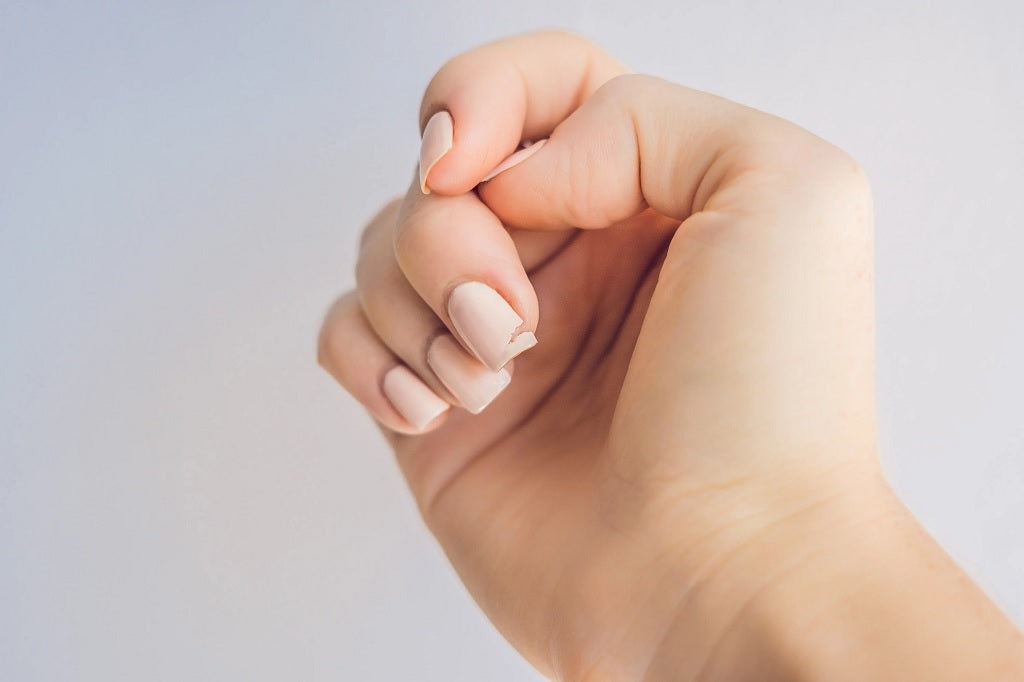
Nail breakage traces to six specific causes. Here is the mechanism behind each one, and a daily hydration-plus-protection routine that lets weak nails recover rather than keep breaking at the free edge.
Nails that chip, split, or snap at the free edge are a frustration that most women cycle through at least once, and for some the problem returns in recurring waves across different seasons and life stages. The frustrating part is that the same visible symptom often traces back to very different underlying causes, which means a fix that works for one woman can leave another woman no better off than she started. The six causes covered below are the ones that account for most everyday nail breakage; each one has a specific mechanism behind it and a specific correction that targets the mechanism rather than the symptom.
The last section of the article pulls the fixes together into a short daily routine designed for nails that are currently weak and need time to grow back stronger. That routine is where the specific products come in; the six cause-and-fix sections before it are the diagnostic work needed to pick the right routine for the right cause.
“Honestly, I blamed four different polish brands for the free-edge snapping on my index and ring fingernails over two years. The pattern was seasonal, not chemical. Twenty hand washes a day through winter dried the plate; the breakage followed. The polish never changed anything because the polish was never the cause.”
The Six Causes at a Glance
The table below is designed to help a reader identify which cause is most likely producing the breakage pattern she is seeing. Each row lists a cause, the specific signal that distinguishes it from the others, and the section of the article that explains the mechanism and the fix in full.
| Cause | The signal that distinguishes it | What it responds to |
|---|---|---|
| Dehydration and dryness | Nails feel dry, flexible but brittle, often paired with dry cuticle tissue around the plate. | Daily cuticle oil and hand hydration; reduced water and chemical exposure. |
| Nutritional deficiency | Breakage pattern persists across seasons; often paired with hair thinning or skin changes. | Dietary review and, where appropriate, supplementation guided by a healthcare provider. |
| Harsh or acetone-heavy nail product exposure | Nails became worse after a specific product switch; plate thins visibly across months. | Switch to formulations without the ingredients that correlate with the deterioration. |
| Frequent hand washing and sanitiser use | Breakage increased after a job or lifestyle change that raised wash frequency. | Gentle nail care routine; moisturisation after each wash cycle. |
| Underlying health condition | Breakage paired with other systemic symptoms; patterns not explained by lifestyle factors. | Medical consultation for diagnosis and treatment. |
| Age-related changes | Breakage gradually appeared from the mid-40s onward; nails read thinner than they used to. | Daily hydration routine; protective coating layers; attention to diet. |
Cause One: Dehydration and Dryness
Nails are a keratin structure that depends on moisture to stay flexible. When the plate dries out, keratin layers lose the pliability that lets them bend without snapping, and the free edge becomes prone to breakage at the slightest mechanical stress. Frequent water contact, exposure to harsh household cleaners, cold weather, and low indoor humidity all strip moisture from the plate faster than the body replaces it from underneath.
The fix is specific and daily. Apply a cuticle oil or hand cream at least once a day, with additional applications after any extended water or chemical exposure. Natural plant oils such as jojoba, almond, or sweet almond oil penetrate the plate and the surrounding cuticle tissue effectively. Wearing gloves during household cleaning, dishwashing, or any task involving extended water contact adds a physical barrier that stops the moisture loss at the source rather than trying to replace it after the fact.
The common home misstep is to apply the oil once in the morning and consider the hydration step complete for the day. In practice, the plate requires multiple applications across the day for the hydration to compound into visible improvement over weeks.
Cause Two: Nutritional Deficiencies
Nails grow from a matrix of cells at the nail root, and that growth depends on the same vitamins and minerals that support hair and skin regeneration. Diets persistently low in biotin, vitamin E, iron, zinc, or omega-3 fatty acids can produce nails that grow in weaker or thinner than the woman is used to. Deficiencies tend to show up as a sustained pattern across many months rather than as a sudden single break.
The dietary fix is to increase intake of the foods that supply these nutrients: eggs, nuts, seeds, leafy greens, and fish are common sources. For women who suspect a specific deficiency, consulting a healthcare provider for a blood panel before beginning supplementation is a reasonable step; biotin supplementation specifically can affect certain blood tests and is worth discussing with a doctor rather than starting independently.
This article treats the nutritional dimension at a general level because dietary and supplement decisions sit outside the editorial scope and belong in a medical conversation. The signal that nutrition is the primary cause is a breakage pattern that persists across seasons and lifestyle changes without responding to the hydration and product changes covered in the other sections.
Cause Three: Overuse of Harsh Nail Products
Specific ingredients present in some nail products have been documented as contributors to plate weakening and sensitisation over sustained use. The three most commonly discussed are dibutyl phthalate, toluene, and formaldehyde, which collectively earned the industry nickname of the Toxic Trio in older cosmetic literature. Beyond these three, acetone-based polish removers used frequently can also dry the plate and surrounding tissue to the point where breakage patterns emerge, independent of what polish is being applied on top.
The fix is to reduce exposure to the specific ingredients that correlate with the deterioration a woman is experiencing. For gel polish specifically, formulations that exclude certain reactive monomers reduce both the chemical burden on the plate and the risk of allergic sensitisation that develops in some women over repeated use.
“I kept chasing the dry-skin reaction around my cuticles with hand creams. My dermatologist asked to see my nail products. One bottle had toluene listed in the top three ingredients. I replaced it with a 10-free formulation and the cuticle irritation cleared inside one month.”
Two specific gel polish lines excluding HEMA and TPO as a product-category choice are A’DOR Signature 144 HEMA & TPO Free and A’DOR Gel-Ons 72 (HEMA & TPO Free). The HEMA-free positioning is a factual chemistry choice, documented on the product descriptions rather than a safety guarantee; women who have been identified as sensitised to HEMA by a dermatologist can match the ingredient profile of these lines to the ingredient they are avoiding. For acetone exposure specifically, extending the interval between polish-change appointments and avoiding acetone-based removers at home between appointments both reduce the cumulative exposure that drives dryness-related breakage.
Takeaway
Harsh-ingredient exposure is a cumulative effect, not a single-application harm. Reducing weekly exposure matters more than a single product swap.
Cause Four: Frequent Hand Washing and Sanitiser Use
Hand hygiene is a baseline health practice, and this article is not suggesting reducing it. What matters for nail breakage is understanding that the same practice that keeps hands clean also dries the plate and the surrounding tissue, and that the drying effect compounds across the day in professions and lifestyles that involve high wash frequency. Alcohol-based sanitisers accelerate the drying effect further because alcohol evaporates faster than water and takes additional surface moisture with it.
The fix is a gentle nail care routine applied around the wash cycle rather than instead of it. After each extended wash session, applying a hand cream or cuticle oil within a few minutes restores the moisture layer that the washing has removed. Over the course of a working day, this adds a few seconds per wash and prevents the cumulative dryness that otherwise builds across weeks.
Day-to-day nail care also matters at this stage. Avoid using the nails as tools to open packages or scrape labels; both motions concentrate stress at the free edge where the plate is already thinnest. Trim and file nails regularly, use a fine-grit file in one direction rather than sawing back and forth, and shape rather than shorten aggressively when the plate is in a vulnerable period.
Cause Five: Underlying Health Conditions
Several systemic health conditions affect nail growth and strength, including thyroid disorders, psoriasis, eczema, and various autoimmune conditions. Fungal infections of the nail bed also produce breakage patterns, often paired with discolouration or thickening that distinguishes them from the lifestyle-driven causes above. These medical causes fall outside what any cosmetic routine can resolve.
The appropriate response is to consult a healthcare provider for diagnosis when the breakage pattern persists after the hydration, product, and lifestyle corrections have been in place for several months without visible improvement. Specific signals that point toward a medical cause include breakage paired with systemic symptoms such as fatigue, temperature sensitivity, or hair thinning; patterns that developed suddenly without a lifestyle trigger; and visible changes in the plate colour or thickness that go beyond simple weakening.
Cause Six: Age-Related Changes
From the mid-forties onward, the natural oil production that keeps the nail plate flexible gradually decreases, and cell regeneration slows across the whole body including the nail matrix. Nails that held up through decades of normal daily use may begin to feel thinner and snap more easily, often in the absence of any specific lifestyle change that would otherwise explain the shift. This is a real and documented physiological pattern rather than a problem the woman has brought on herself.
“Fifty hit and my nails went from strong to fragile inside twelve months on no change in my routine. The dermatologist called it age. Lavis 24K Gold Nail & Cuticle Oil nightly and SNS Signature Serum each morning gave me three months of stabilization. The nails are not restored to twenty-year-old condition; they just no longer fail weekly.”
The response to age-related thinning is a layered daily hydration routine that works at three levels: cuticle oil applied directly to the plate and the surrounding tissue; a cuticle serum applied to deliver conditioning actives into the matrix; and a hand lotion applied across the full hand to prevent the overall drying that otherwise reaches the nails indirectly. Running all three products daily, as a routine rather than as individual applications, is what produces the compounding effect that stabilises the plate over the course of a few months.
A worked example of this three-product routine: SNS Signature Serum applied at the cuticle each morning to deliver conditioning to the matrix; Lavis 24K Gold Nail & Cuticle Oil applied before bed to work on the plate overnight when the hand is at rest; and A’DOR Hand Lotion applied several times across the day, especially after any water or chemical contact. Each product targets a different layer of the hand-and-nail system, and running all three in combination produces more visible improvement than relying on any one of them alone.
Takeaway
Age-related nail thinning responds to a layered daily routine, not to a single product. Running cuticle serum, cuticle oil, and hand lotion together produces compounding results that any one of them produces more slowly on its own.
A Daily Routine for Weak Nails That Need Time to Rebuild
Nails that have been breaking consistently need both the recovery of their natural strength and physical protection while they grow back. The internal recovery comes from the hydration routine covered in the aging section above; it applies equally well to any woman with weak nails regardless of what originally caused the weakening. The physical protection comes from a thin gel-polish coating that reinforces the plate against mechanical stress while the recovery happens underneath.
The coating approach uses a protective base coat and a durable top coat, with or without a colour layer in between, applied in a thin layer that reinforces the plate without adding bulk. The base coat and the top coat each do a specific job that the other cannot substitute for.
The base coat sits directly on the natural plate and provides the adhesion layer for whatever goes on top. For weak nails specifically, a well-adhering base coat prevents lifting at the cuticle, which is where mechanical stress tends to find weakened spots first. LAVIS Gel Polish Base Coat applied in a thin even layer across the plate adheres cleanly to the natural nail and gives the coating stack its structural foundation.
The top coat seals the stack and provides the hard outer surface that absorbs the mechanical stress of daily use before that stress reaches the natural plate underneath. For nails rebuilding from weakness, a top coat with added durability extends the protective interval between appointments and reduces the frequency of touch-up applications. LAVIS Gel Polish Diamond Top Coat is formulated to add a protective layer with extended wear across the colour layer underneath; both the structural toughness and the visual gloss work in favour of the recovery process by keeping the coating intact longer and reducing how often the plate is exposed to removal cycles.
The combined routine for a nail rebuilding period of two to three months looks like this. Morning: SNS Signature Serum at the cuticle. Across the day: A’DOR Hand Lotion after any wash or chemical exposure. Evening: Lavis 24K Gold Nail & Cuticle Oil before bed. At appointment intervals: LAVIS Gel Polish Base Coat and LAVIS Gel Polish Diamond Top Coat as a thin protective coating stack, with or without a colour layer in between. The hydration routine runs daily; the coating routine runs on the normal manicure cycle; together they stabilise the breakage pattern across the recovery window.
Takeaway
Weak nails need both internal hydration and external protection. The daily routine delivers hydration; the gel-polish coating cycle delivers protection. Running both together is what produces visible recovery across two to three months.
Frequently Asked Questions
My nails break at the free edge every few weeks. What is the most likely cause?
The most common cause of free-edge breakage is dehydration of the plate, which makes the keratin layers brittle and prone to snapping at the thinnest point. If the breakage pattern is seasonal or coincides with a job or lifestyle change that increased water or chemical exposure, dehydration is the first cause to address with a daily cuticle oil and hand lotion routine.
Are there specific gel polish lines designed without the harsher reactive monomers?
Yes. A’DOR Signature 144 HEMA & TPO Free and A’DOR Gel-Ons 72 (HEMA & TPO Free) are two gel polish lines that exclude both HEMA and TPO as a product-category chemistry choice. Women who have been identified by a dermatologist as sensitised to HEMA can match the ingredient profile of these lines to the specific monomer they are avoiding.
My nails became fragile when I turned fifty. Is there something that actually helps?
Age-related nail thinning responds to a layered daily hydration routine rather than to any single product. A three-product routine of cuticle serum (such as SNS Signature Serum), cuticle oil (such as Lavis 24K Gold Nail & Cuticle Oil), and hand lotion (such as A’DOR Hand Lotion) run every day for several months produces more visible improvement than relying on any one product alone.
Should I take biotin supplements if my nails keep breaking?
A healthcare provider is the right person to answer that question for an individual case. Biotin supplementation can affect certain blood tests and is worth discussing with a doctor rather than starting independently. If the breakage pattern persists after the hydration and product corrections have been in place for several months, that is a reasonable point to raise the question with a medical professional.
Can gel polish actually help weak nails rather than make them worse?
A thin protective gel coating can reinforce weak nails against the mechanical stress of daily use while they grow back from the matrix. The combination of a base coat such as LAVIS Gel Polish Base Coat for adhesion and a durable top coat such as LAVIS Gel Polish Diamond Top Coat for the hard outer surface delivers that reinforcement when applied in a thin even layer rather than built up thickly. The internal recovery still depends on the daily hydration routine; the coating protects the plate while the recovery happens underneath.


