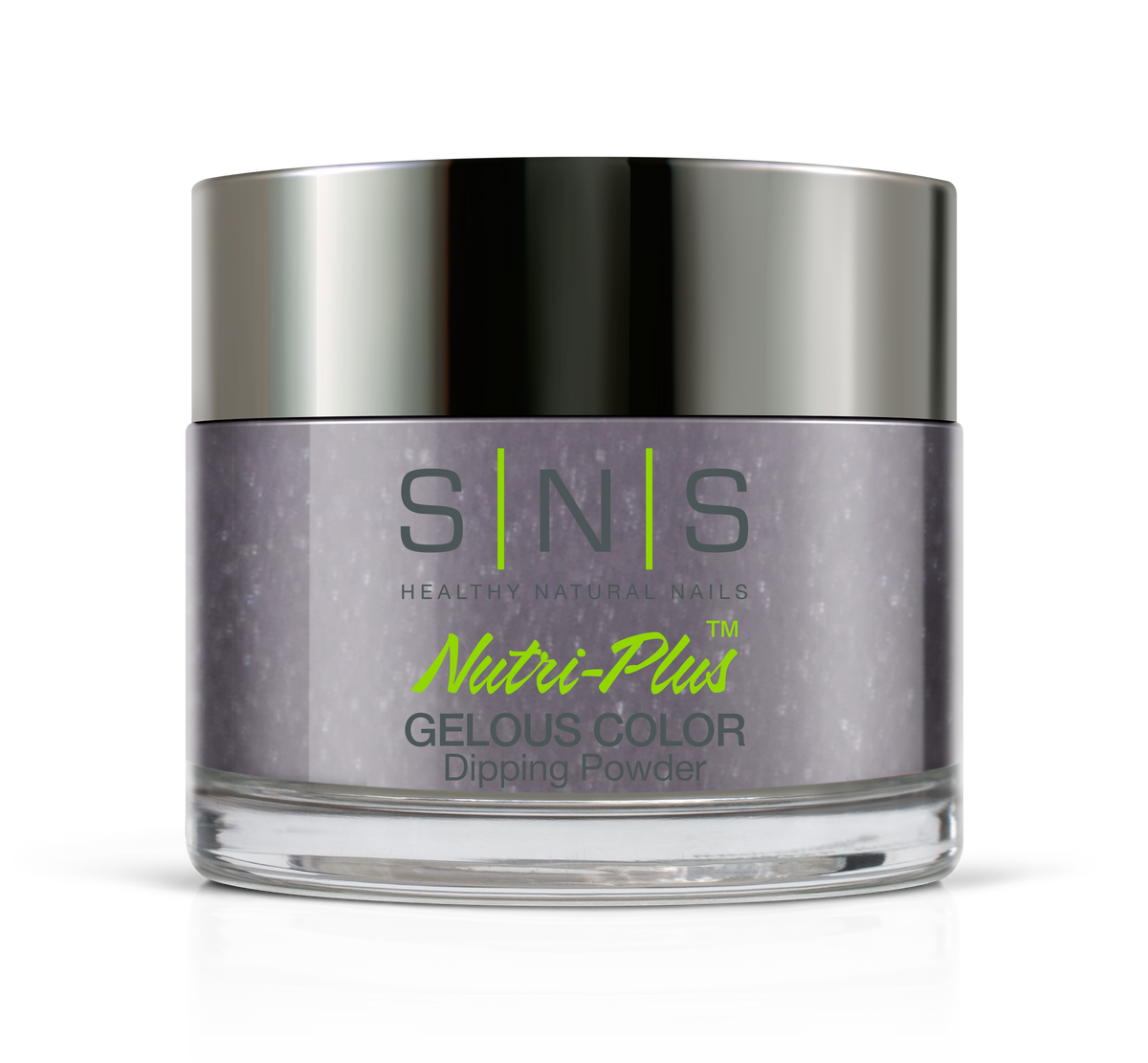

Dip powder does not grow nails; the matrix at the nail root does. Here is what dip powder actually contributes to the growth process, where its limits sit, and the routine that supports visible length over several months.
The promise of longer, stronger nails is one of the most-searched aspirations in nail care, and dip powder manicures are often marketed as a direct path to that outcome. The reality is more useful than the marketing, and it is worth understanding before you invest several months of appointments into the expectation. Dip powder cannot grow nails. The nail matrix at the root of the plate grows the nails. What dip powder can do is protect the nails that have already grown, extend the time they spend at full length before snapping or chipping, and support an environment where the natural growth process is less often interrupted by breakage.
That distinction changes what you should expect and how you should judge your own progress. The sections below separate what dip powder actually contributes from what the biology of the nail matrix does on its own, so the decision you make is an informed one rather than one built on a product promise.
What Actually Grows Your Nails: The Matrix, the Plate, and the Timeline
Nails grow from a layer of specialized cells called the matrix, located under the skin at the base of each nail where the cuticle sits. The matrix produces new keratin cells continuously, and those cells harden into the plate as they move outward toward the free edge. The visible nail from cuticle to tip is a record of several months of matrix activity. The full structure, and which parts of it you can and cannot influence, is laid out in nail anatomy for dip users.
Average adult fingernail growth sits at roughly three to three and a half millimeters per month, a little over an eighth of an inch, and a fingernail takes about four to six months to grow out from matrix to free edge. That means the plate on your index finger today is the output of roughly half a year of matrix work.
Factors that genuinely influence the growth rate include age (growth slows gradually from the mid-forties onward), general health, nutritional status, and season (nails grow slightly faster in warmer months). Factors that do not meaningfully change the rate include whichever coating or polish sits on top of the plate. The matrix produces new cells regardless of what is painted over the plate that has already formed.
What any coating can influence is whether the newly grown length survives long enough to be seen. A nail that reaches twelve millimeters of free edge and then snaps at week six has grown exactly as much as a nail that reaches twelve millimeters and holds through to week ten. The difference is that the second person gets to see the length and the first does not. This is the honest frame for understanding what dip powder contributes.
Takeaway
Nails grow from the matrix at the root, not from products applied to the plate. The rate is roughly three to three and a half millimeters per month. Coatings can protect what has already grown; they cannot speed up matrix output.
What Dip Powder Actually Does for Nail Length and Strength
Within that frame, dip powder makes four specific contributions to how your nails look and perform over a wear cycle. Each one has a mechanism behind it worth understanding, and each one is bounded by what coatings in general can and cannot do for the natural nail underneath.
Benefit One: Mechanical Reinforcement of the Plate
Dip powder forms a hard coating that sits on top of the natural nail and adds real thickness to the structural stack. When your hand catches on a keyboard key or a car door handle, the mechanical stress of that contact meets the dip layer before it meets the natural plate underneath. The dip layer absorbs the stress and spreads it across its own thickness, so the plate feels less of the impact than it would bare.
The reinforcement works best when the dip coating sits on a prepared base that bonds cleanly to the natural plate. A thin layer of LAVIS Gel Polish Base Coat under the dip stack anchors the coating to the plate and resists the premature lifting that mechanical stress tends to start at the cuticle. Sealing the finished stack with LAVIS Gel Polish Diamond Top Coat adds a hard outer layer that takes daily wear before it reaches the natural plate. The combined sandwich around the dip powder extends the useful wear interval, which in turn reduces how often the plate goes through a removal cycle.
One honest caveat about that sandwich: a gel base and a gel top coat are UV-cured gel products, not dip chemistry. If you are avoiding gel monomers for a diagnosed reason, see the chemistry section below before you build that stack, because the gel layers put gel chemistry back into a service that would otherwise not contain it.
Thickness matters in the other direction too. Layers built heavier than the plate needs do not add proportional strength; they add bulk at the cuticle that lifts earlier. The working range is covered in the dip powder thickness guide.
“Twelve millimeters was always my breaking point. Six months of dip sets built on a gel base and sealed with a hard top coat let me see fourteen and sixteen. The nails had always grown that far; they just never survived the trip.”
Benefit Two: Protection from Environmental Damage
The natural nail plate is porous and absorbs water, household cleaning chemicals, and other substances it meets regularly. Each absorption-and-drying cycle slightly weakens the keratin structure, which is why people who do heavy manual work or wash their hands repeatedly through the day develop brittleness patterns with no single trauma to point at.
Dip powder forms a continuous surface that cuts direct exposure of the plate to those stressors. The protection depends entirely on the prep and base holding the stack sealed against the plate from cuticle to free edge. A nail prepped with a dedicated dehydrating prep such as LAVIS Nail Prep PH Bond and a thin layer of SNS Dip Essentials Gel Base creates the sealed interface the environmental protection relies on. Lifting at any edge of the stack opens a path for water and chemicals to reach the plate underneath, which cancels the protection for whatever area sits under the lift. The full prep sequence sits in the ten-step nail prep checklist.
Takeaway
Environmental protection from dip powder depends on the coating staying sealed against the plate. Lifting breaks the seal and ends the protection for the affected area, which is why a lift is worth fixing rather than wearing out.
Benefit Three: Supporting the Nail Bed Environment
The nail bed environment is the skin and cuticle tissue around the plate, which affects how comfortably the plate sits in its growth position and how reliably the matrix keeps producing keratin. Products that contact cuticle tissue over sustained wear either support that environment or contribute to irritation that affects growth indirectly.
If a dermatologist has identified you as sensitized to specific monomers in gel polish, the product-category chemistry matters. Two A’DOR gel polish ranges exclude both HEMA and TPO as a documented formulation choice: the A’DOR HEMA-Free Set, 144 colors and the Color Me Gel-Ons sets, sold as Part 1 and Part 2 at 36 colors each. Those exclusions are ingredient-list facts stated on the product pages, so you can match the formulation to the specific monomer you have been told to avoid. The exclusion is not a general safety guarantee; it is a specific chemistry choice that matters in the specific clinical situation where a sensitization has been diagnosed.
Dip powder itself does not contain HEMA or TPO, because the dip system bonds with a cyanoacrylate resin rather than the UV-cured monomers that HEMA and TPO belong to. That is also why a dip set needs no lamp. The caveat is the one noted above: a gel base coat or a gel top coat used with dip is a UV gel product, and so is any gel polish booked in the same visit. Read the stack you are actually wearing, not just the powder in the middle of it.
Benefit Four: Protecting Existing Growth from Loss
This is the mechanism behind the widespread perception that dip powder helps nails grow longer. It does not raise matrix output or speed up the biological process. What it does is reduce how often newly grown length is lost to breakage before you get to see it. Over several months, someone whose nails were previously snapping at a given length will watch her nails pass that length, because the coating has prevented the breakages that used to reset the length every cycle.
The coating also discourages the self-inflicted damage patterns that short nails tend to accumulate: biting, cuticle picking, and the habit of peeling or scraping at any surface irregularity. A smooth, firm surface gives the hand no edge to pick at and nothing soft to bite into, which closes two common routes by which natural nails lose length faster than the matrix produces it. If breakage rather than growth rate is your real constraint, the six underlying causes are worked through in why do my nails keep breaking.
What Dip Powder Does Not Do
The counter-list matters as much as the benefit list, because the misconceptions about dip powder are what produce the disappointment three months in.
Dip powder does not accelerate matrix growth. The rate at which new keratin cells are produced is set by the matrix and the systemic factors that act on it, none of which are affected by what sits on the plate surface. A matrix producing three millimeters a month will keep producing three millimeters a month whether you wear dip powder, gel polish, or nothing at all.
Dip powder does not deliver nutrients to the nail plate. The phrase nutrient-rich ingredients that promote healthy growth appears across the whole dip powder category, including in older copy on this site. It describes what is in some products; it does not describe a biological delivery mechanism. The plate is largely impermeable at the scale required for a substance in a surface coating to reach the matrix underneath. Nutrition for the matrix arrives through the bloodstream from what you eat, which is the subject of the best foods and vitamins for strong nails.
Dip powder does not substitute for a daily routine. Someone who wears dip powder but never hydrates her cuticles, washes her hands two dozen times a day with no protective barrier, and peels sets off between appointments will see no length improvement from any coating. The coating works alongside the routine; it does not replace it.
Dip powder does not fix a lifting problem caused by prep. If sets lift at week one, the answer is in the prep and application, not in a stronger product. The specific causes are in common mistakes to avoid when applying dip powder at home.
“Online articles sold me on dip powder as a growth accelerator. Three months into my sets, nothing was visibly longer. The technician walked me through what dip actually does: it prevents breakage, it does not change matrix speed. My own matrix is slow. Month five finally showed me a difference, and that difference was something the dip had preserved rather than created.”
Supporting the Growth Process While You Wear Dip Powder
Three things sit inside your control: how the set goes on, how it comes off, and what you do for the plate every day in between.
Application
The quality of the application sets the ceiling for everything that follows. A set applied without proper prep, with layers that are too thick, or with uneven activator will lift early no matter what you do afterward. For a first attempt at home, one salon appointment to watch the full workflow in person is often worth more than several articles. The full home sequence is in the guide to a DIY dip powder manicure, and the mistakes that cause each specific failure are itemized in common mistakes to avoid when applying dip powder nails.
Gentle Removal
The damage pattern most often blamed on dip powder traces back to the removal step, specifically to aggressive filing or peeling the set off between appointments. Soaking the set off in acetone with the appropriate wrap or bowl, then easing the softened material off the plate with a cuticle pusher, preserves the natural nail for the next cycle. Removal shortcuts are the single most common cause of the thinning that gets attributed to the powder itself. The method is in how to safely remove dip powder at home, and the wider question of whether dip harms the nail is handled in is dip powder bad for your nails.
Do not peel
Peeling a set off takes layers of the natural plate with it. A plate thinned that way is weaker for the next cycle than it was for this one, which produces exactly the pattern of worsening nails that gets blamed on dip powder as a category.
Daily Hydration Routine
The natural plate sits under the dip coating and still responds to the same daily care it would need with nothing on top. A short daily routine supports the plate through the wear cycle and keeps the cuticle environment hydrated so the matrix keeps producing keratin reliably.
A worked routine runs on three levels. SNS Signature Serum at the cuticle each morning conditions the skin around the area where new growth is produced. SNS Vitamin Oil before bed works on the plate and the surrounding skin overnight, when the hand is at rest and nothing washes it off. A hand cream applied several times across the day, especially after any water or chemical contact, holds back the general hand drying that reaches the nails indirectly.
Be clear about what hydration does and does not do, since it is the same distinction the rest of this article turns on. Oil and cream keep the plate and the surrounding skin flexible, and a flexible plate chips and splits less than a dry one. They do not feed the matrix. The benefit is retention of what grows, not a faster growth rate — which is the same mechanism as the coating, working on a different layer.
“Before and after photos told the story. Three dip cycles with no visible length, then two cycles with a nail oil at bedtime, and my nails looked clearly longer in the second set of photos. The growth had been identical across both. The hydration was what let me see it.”
How Long Before I See Results?
The visible-results timeline depends on two things: your matrix growth rate, and the length at which you were previously losing nails to breakage. If your nails were breaking often, results arrive sooner, because you go from losing length regularly to keeping it and the baseline for comparison moves fast. If your growth rate is average and your nails were already holding at a moderate length, visible change is slower, because the retention gain is smaller to begin with.
| Timeline | What is happening | What you typically see |
|---|---|---|
| Month 1 | The first dip cycle completes without the breakage pattern that previously reset the length. | Nails feel firmer and look more uniform. Length change is minimal, because the matrix has produced only about three millimeters of new growth in the cycle. |
| Months 2 to 3 | The second and third cycles complete. New growth from month one is now out at the free edge, where the breakage used to happen. | Visible length increase begins to appear at the free edge. The length may still fall inside your normal pre-dip range if the earlier breakage was moderate. |
| Months 4 to 6 | Retention of newly grown length starts to compound. The plate reaches lengths you had not previously seen, because earlier breakage reset the length before this point. | Clearly longer nails in daily life and in photographs. The change is now obvious to you and to people around you. |
| Month 6 and beyond | Steady state at the new baseline. Further gain depends on your individual growth rate and on whether you want to go past the current length. | Nails hold at the new length through routine wear cycles. Further gain tapers off at the length where growth rate balances against natural edge wear. |
Set your expectations against the biology rather than against the marketing. Visible change in the first month is uncommon, and what feels like change is often the firmer coating reading differently against the fingertip. Real length change starts to show in month two or three and compounds over the following months, after which length stabilizes at a new baseline set by your own matrix output and how you use your hands.
Takeaway
Visible length change begins at month two or three and compounds across the following months. The first month is foundation work; the real retention gain shows up later.
When the Problem Is Not the Coating
If several months of well-applied, gently removed sets and a consistent daily routine produce no change at all, the constraint is probably not the coating and not the routine. Three other explanations are worth checking before buying a different product.
The first is that the growth is happening and the free edge is wearing away as fast as it arrives, which looks identical to no growth. Heavy keyboard work, gardening, and handling cardboard all abrade the edge continuously.
The second is shape. A shape that concentrates stress at a point fails at a shorter length than one that distributes it, so the same growth rate produces a different maximum length depending on the shape you wear. The trade-offs are compared in choosing the right nail shape.
The third is systemic. Nail plate changes can reflect general health, and a persistent change in color, texture, or shape is something a dermatologist should look at rather than something to manage with products. The American Academy of Dermatology's dermatologist tips for healthy nails set out which changes warrant a visit. What your nails may be signaling about the rest of your health is covered in surprising things your nails say about your health.
Frequently Asked Questions
Does dip powder actually make my nails grow faster?
No. The growth rate is set by the matrix at the base of the nail, which runs on its own biological timeline and is unaffected by coatings on the plate. What dip powder does is reduce the breakage that previously reset your length, so the growth that was always happening finally becomes visible.
How many months before I see visible length change under dip powder?
Typically two to three months, with the clearest change between months four and six. The first month is foundation work, during which the matrix produces about three millimeters of new growth that is not yet long enough to pass the length where you were previously losing nails.
Can nutrient-rich ingredients in dip powder reach my nail matrix?
No. The plate is largely impermeable at the scale that would be required for a substance in a surface coating to reach the matrix underneath. Nutrition for the matrix comes through the bloodstream from what you eat, not from a topical product. Oils and creams are still worth using, but for plate and cuticle flexibility rather than for feeding the matrix.
What is the single most important thing to do while wearing dip powder to support nail growth?
Hydrate the cuticles and the plate daily, consistently rather than occasionally. A routine of cuticle serum such as SNS Signature Serum, a nail oil such as SNS Vitamin Oil, and a hand cream applied every day for several months produces more visible improvement than any single product applied sporadically.
What should I do if my nails do not appear to be growing even with dip powder?
Check two things first. Look at how your removal is being done, because aggressive filing or peeling takes away the length you were trying to keep. Then look at your daily hydration, because a dry cuticle environment slows visible growth even while the matrix is producing new cells normally. If both are in order and the pattern holds for several months, a healthcare provider can assess whether a systemic factor is affecting the matrix.