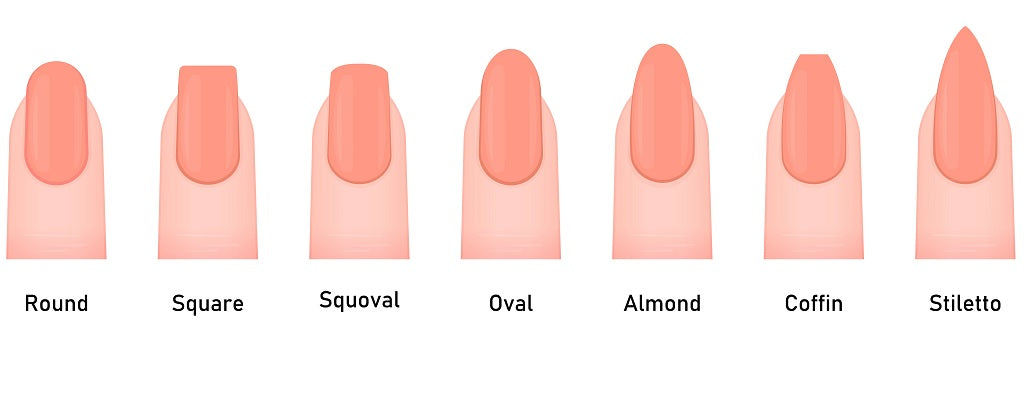
Nail shape sits at the intersection of finger anatomy, lifestyle, and the material class holding the shape. Here is how to read your fingers, pick a shape that works, and match it to the right structural material.
Choosing a nail shape is often treated as a style decision, and it is one. The shape of the finished nail reads immediately in photographs, from across a room, and in every handshake the wearer gives. What the style conversation misses is the second half of the decision: nail shape also sits on top of specific finger anatomy, and the shape only works as well as the material class holding it in place. A dramatic almond or stiletto on a short nail bed produces one result; the same shape on a long nail bed produces another; and the same shape built in builder gel beyond its design range produces something that neither suits the finger nor holds through the wear cycle.
The article below works through seven shapes with the anatomy and the material class each one needs. The opening section covers the three anatomy questions to answer about your own fingers before the shape conversation starts, so the rest of the guide can be read as a shortcut rather than as a rulebook that applies universally.
How to Read Your Fingers Before Picking a Shape
Three dimensions of finger anatomy determine which shapes read correctly on a given hand. Identifying each one takes about thirty seconds in front of a mirror and resolves most of the shape-selection decisions the rest of the article covers.
The first dimension is nail bed length. Look at your natural nail from cuticle to the start of the free edge. Short beds (less than about a centimeter on the index finger, roughly three-eighths of an inch) read well under shapes that visually elongate; long beds (more than about a centimeter and a half, roughly five-eighths of an inch) accommodate most shapes including the dramatic ones without visual distortion.
The second dimension is nail bed width. A narrow bed reads flattered under tapered shapes that follow its own line. A wide bed reads flattered under shapes with parallel sides that frame rather than taper the plate.
The third dimension is finger length relative to the hand. Short fingers benefit from shapes that elongate visually; long fingers can carry any shape without needing the elongation effect. Combined with the first two dimensions, these three readings resolve most shape decisions before the aesthetic preference even enters the conversation.
| Finger reading | Shapes that flatter it | Shapes that may distort it |
|---|---|---|
| Short nail bed, short finger | Oval, almond; shapes that elongate the visible nail line. | Square; shapes with flat parallel sides that emphasize the short bed. |
| Long nail bed, long finger | All shapes; the anatomy accommodates most style choices. | None mandatory to avoid; preference-driven decision. |
| Narrow bed, long finger | Almond, stiletto, coffin; tapered shapes that follow the natural line. | Wide square shapes that create a visual mismatch with the narrow natural bed. |
| Wide bed, short finger | Squoval, round; shapes with parallel sides that frame rather than taper. | Dramatic tapers (stiletto) that read as mismatched against the wide base. |
Takeaway
Three anatomy readings in thirty seconds. The nail bed length, bed width, and finger length together resolve most shape selection before style preference enters the conversation.
Square: The Classic Statement
Square nails sit with straight edges along the sidewall and a flat line across the free edge. The shape produces a clean, uniform look that reads polished and consistent across the whole hand. Maintenance is moderate; the straight edges require regular filing to stay sharp, and once the sharp corners begin to round from daily use the shape has started to drift and needs resetting at the next appointment.
Who it suits: women with long nail beds and medium-to-long fingers can wear square without the shape competing against the anatomy. Women with short fingers often find that the straight parallel sides read as emphasizing the shortness rather than counteracting it; squoval is usually a better reading of the same underlying preference for a clean uniform shape.
Round: The Low-Maintenance Default
Round nails follow the natural contour of the fingertip, with soft curves that mirror the shape of the nail bed itself. The shape is the lowest-maintenance of the seven covered here because the natural plate grows out roughly in this shape by default; filing simply refines what the plate is already producing. Breakage risk is also the lowest of the seven shapes because the curved edge distributes mechanical stress rather than concentrating it at a sharp corner or a dramatic point.
Who it suits: women with short-to-medium beds and women with any finger length who prefer a shape they do not have to think about between appointments. The round shape also creates a visual elongation effect for short fingers because the curved tip reads longer than a flat square edge would read on the same finger.
Squoval: The Hybrid
Squoval combines a mostly straight free-edge line with rounded corners, producing a shape that reads both polished and softer than a true square. The compromise resolves the classic problem of square being too sharp for a specific hand and round being too casual for a specific occasion; squoval accommodates both constraints at once.
Who it suits: nearly every finger shape and nail bed length. The squoval shape is the universal fallback for women who have not yet settled on a preference and need a shape that works across variable occasions and clothing choices. Breakage risk sits between round and square, closer to the round end of the range because the softened corners resist the chip-at-the-corner failure that true square shapes produce under mechanical stress.
Oval: The Elegant Elongator
Oval shapes taper gradually from the sidewall to a rounded tip, producing an elongated reading that works well on hands with short-to-medium bed length. The oval is often confused with round in casual conversation; the distinction is that round follows the natural fingertip contour while oval extends past it into a more elongated line.
Who it suits: women with short-to-medium beds who want a shape that visually lengthens the finger without the maintenance cost of a dramatic shape. Breakage risk is moderate; the tapered sides concentrate slightly more stress at the tip than a round shape does, but the rounded tip itself distributes stress better than a pointed shape would.
“I spent years in square because that was what my regular technician defaulted to without asking. When I finally sat down and told her my fingers felt stubby in photographs, she switched me to oval and the visual change was immediate. The shape had been working against my anatomy the whole time. No one had mentioned the option.”
Almond: The Tapered Elongator
Almond shapes resemble the actual nut: tapered sides narrowing to a rounded point that sits slightly offset rather than at the dead center of the nail. The visual effect is one of elegant elongation that reads more deliberate than oval and less dramatic than stiletto. Almond works across a wide range of nail bed widths because the taper can be adjusted to the specific bed; a narrow bed takes a sharper almond, a wider bed takes a softer one.
Who it suits: women with narrow beds specifically. The almond taper follows the natural line of a narrow bed and reads as a continuation of the finger shape rather than as a shape imposed on top of the finger. Breakage risk is higher than oval because the tapered sides concentrate stress toward the point, but lower than stiletto because the point itself remains rounded rather than sharp.
Stiletto: The Dramatic Point
Stiletto nails take the almond concept and extend it into a longer, sharper point reminiscent of the heel the shape is named after. The visual effect is immediate and unmistakable: the point elongates the finger dramatically and signals a deliberate style choice from across any room. Stiletto also carries the highest breakage risk of the seven shapes because the sharp point concentrates mechanical stress at a single location that catches on surfaces during normal daily use.
Who it suits: women with narrow beds and medium-to-long fingers who are willing to accept the maintenance interval that stiletto demands. Women with hands-on daily work or athletic routines usually find the breakage frequency exceeds what they can tolerate.
“I did my first stiletto set for a friend’s wedding and lost three nails inside two weeks. The shape itself was fine; my job involves typing eight hours a day and my fingers caught the pointed tips on every keyboard pass. I went back to almond at the next appointment and the breakage pattern stopped. The lesson was not that stiletto is bad; the lesson was that my daily hand use did not match the shape I had chosen.”
The structural requirement for stiletto is non-negotiable. The nail needs a protective coating stack that reinforces the plate against the mechanical stress concentrated at the point. A thin coating of LAVIS Gel Polish Base Coat applied directly on the natural plate gives the coating stack its structural foundation and bonds cleanly at the cuticle, where premature lifting under stress tends to find weakened spots first. Sealing the full stack with LAVIS Gel Polish Diamond Top Coat adds a hard outer layer that absorbs daily mechanical stress before it reaches the natural plate underneath. The two-coat sandwich extends the usable wear interval and reduces the frequency of mid-cycle breakage that would otherwise cost the appointment.
Takeaway
Stiletto carries the highest breakage risk of the seven shapes. Match it to light-use lifestyles and reinforce it with a protective coating stack, or expect the breakage frequency to shorten the usable wear interval.
Coffin / Ballerina: The Flat-Topped Taper
Coffin or ballerina nails combine the tapered sidewalls of almond with a flat squared-off tip that stops short of a true point. The visual effect reads modern and architectural; the shape elongates the finger like a stiletto while providing a flat canvas at the tip that accommodates intricate nail art and chrome finishes more cleanly than a pointed shape would.
Who it suits: women with medium-to-long nail beds and narrow-to-medium bed widths who want the elongating effect of a tapered shape without the extreme breakage risk of a true point. The flat tip itself resists the point-concentration-of-stress failure that stiletto produces, which drops the breakage risk of coffin closer to the almond range than to the stiletto range.
Coffin nails typically require length beyond what the natural nail can produce in a reasonable timeframe. For salons extending the natural nail into a coffin shape, the structural material class depends on how far the extension needs to go. For short-to-moderate extension at the two-to-three-millimeter range that builder gel is designed for, builder gel overlay works as the structural material. For the longer coffin silhouettes that appear in editorial photography and inspiration feeds, the extension sits above the builder gel design range and routes to a different material class entirely. SNS PRO Sculpt Poly Gel handles polygel-format extension beyond the builder ceiling, and pre-formed shell systems carry the length that coffin shapes often demand — the LDS Soft Gel Nail Tips range includes full-cover coffin tips in several lengths, and LAVIS High Apex Soft Gel Tips cover the same ground in coffin and squoval. The compatibility details for each extension workflow sit in the guide to builder gel layering and compatibility.
Shape and Length Need Different Materials
The shape conversation often gets detached from the material conversation, which produces the common disappointment pattern of a client bringing in a reference photograph and finding that the shape in the photograph cannot be produced in the material the salon has available. The three material classes below cover the range from overlay-only through full extension, and each one holds specific shape options cleanly.
| Material class | Length and extension range | Shapes that work in this material |
|---|---|---|
| Builder gel overlay | Overlay on the natural nail plus short extension in the two-to-three-millimeter range beyond the natural free edge. | All shapes within the natural-length category: square, round, squoval, oval, short almond. Dramatic length shapes exceed the material design range. |
| Polygel extension | Sculpted extension beyond the builder gel ceiling, built on a dual form that supports the shape during cure. | All shapes including dramatic length options when the technician is skilled in the polygel sculpting technique. Almond, stiletto, and coffin all work in this material class. |
| Soft gel tip plus overlay | Pre-formed shell system that carries the length through a pre-shaped tip, with a builder gel or gel polish overlay on top for structural reinforcement. | Shapes that match the tip pre-shaping, usually almond, coffin, or stiletto in the longer-length ranges that would require sculpting work in other material classes. |
The practical shortcut for the client conversation is to name the length ceiling before the shape conversation begins. Builder gel such as LAVIS Builder Gel In The Bottle – B1 & B2 handles the natural-length range cleanly and sits as the default material for women who want their shape without changing the material class. Polygel handles sculpted extension for shapes that need length beyond the builder ceiling. Pre-shaped shell options in the soft gel tip range carry the dramatic shapes that would otherwise require sculpting; the tip brand choice is a preference between alternatives of the same material category rather than a technical requirement either way. For how the three classes compare side by side, see builder gel vs hard gel, soft gel, polygel, and rubber base.
“A client walked in with a reference photograph of a long almond set and asked for builder gel because that was the service she had always booked. I had to explain in the chair that the length in the photograph exceeded what builder gel is designed to hold, and that the look required a different structural material entirely. We rebooked her the following week for a polygel extension service and the finished set matched the reference photograph. The conversation about material belonged at booking rather than at the appointment itself.”
Takeaway
Shape and material are one decision, not two. Naming the length ceiling before the shape conversation begins prevents the appointment where the chosen shape exceeds what the booked material can deliver.
Choosing Color That Suits Your Shape
Color and shape interact in ways that often go unnamed. The same shade reads differently on a short round nail than it does on a long almond nail; the same shape reads differently in a translucent sheer than it does in a full-coverage opaque. The pairing below is not a rule but a working framework the client and the technician can shortcut from when the appointment is time-constrained.
| Shape | Color direction that reads well | Suggested shade from the available range |
|---|---|---|
| Round and squoval | Soft neutrals and medium-coverage tones that let the natural shape read without competing against it. | A’DOR Gel-Ons 38 Strawberry Milk (neutral pink) or 41 Blush of Dawn (warm nude). |
| Oval and almond | Elegant mid-range shades, sheer-to-medium coverage, elongating effect from the color matching the undertone. | A’DOR Gel-Ons 46 Rebel Without a Mauve (light mauve) or muted mid-tones from the LAVIS C01–C17 gel collections. |
| Square | Bold saturated shades that match the clean architectural lines of the shape. | A’DOR Gel-Ons 56 Red Hot Rendezvous (deep red) or 49 Black Tie Optional (black). |
| Stiletto and coffin | Statement shades that match the dramatic shape, often jewel tones or high-contrast finishes. | A’DOR Gel-Ons 32 Ultra-Violet Vibes (deep magenta) or 48 Viva Fuchsia (deep cherry purple). |
The underlying rule across the table: softer shapes read well under softer colors; dramatic shapes read well under dramatic colors. Mixing the two in the opposite direction can produce interesting results when done deliberately, but it rarely happens by accident, and the accidental mismatch usually reads as either overdressed or underdressed for the shape underneath.
Frequently Asked Questions
How do I identify my nail bed shape before choosing a nail shape?
Look at your natural nail from cuticle to free edge in good light. Note the bed length (short, medium, or long), the bed width (narrow, medium, or wide), and the finger length relative to the hand. Combined, these three readings determine which shapes flatter your anatomy without needing to try each one at the chair.
Which nail shape has the lowest breakage risk for everyday wear?
Round and squoval sit at the lower end of the breakage range because their curved or softened edges distribute mechanical stress rather than concentrating it. Stiletto sits at the highest end because the sharp point concentrates stress at a single location. For hands-on daily work, round or squoval are the practical starting points.
What material class should I ask for if I want a long almond or stiletto shape?
Long dramatic shapes exceed the two-to-three-millimeter extension range that builder gel is designed for. Polygel such as SNS PRO Sculpt Poly Gel handles sculpted extension beyond that ceiling, and pre-formed shell systems using full-cover soft gel tips carry the length through a shaped tip underlayer. The compatibility details sit in the guide to builder gel layering and compatibility.
Can color choice actually make my fingers look longer?
Yes, in combination with shape. Soft neutral shades matched to the skin undertone extend the visual line of the finger, which pairs well with elongating shapes such as oval and almond. Bright saturated shades draw the eye to the nail itself rather than to the finger line, which pairs well with dramatic shapes such as stiletto and coffin where the shape itself is the elongation statement.
How often do I need to refile my shape between appointments?
Shapes with sharp corners or dramatic points (square, stiletto, coffin) drift fastest under normal wear and typically need light touch-up every one to two weeks between appointments to maintain the line. Round and squoval drift more slowly and often hold their shape through the full maintenance interval without touch-up filing. Oval and almond sit between the two extremes.